Tiếng Việt
 中文 (中国)
 日本語
日本語
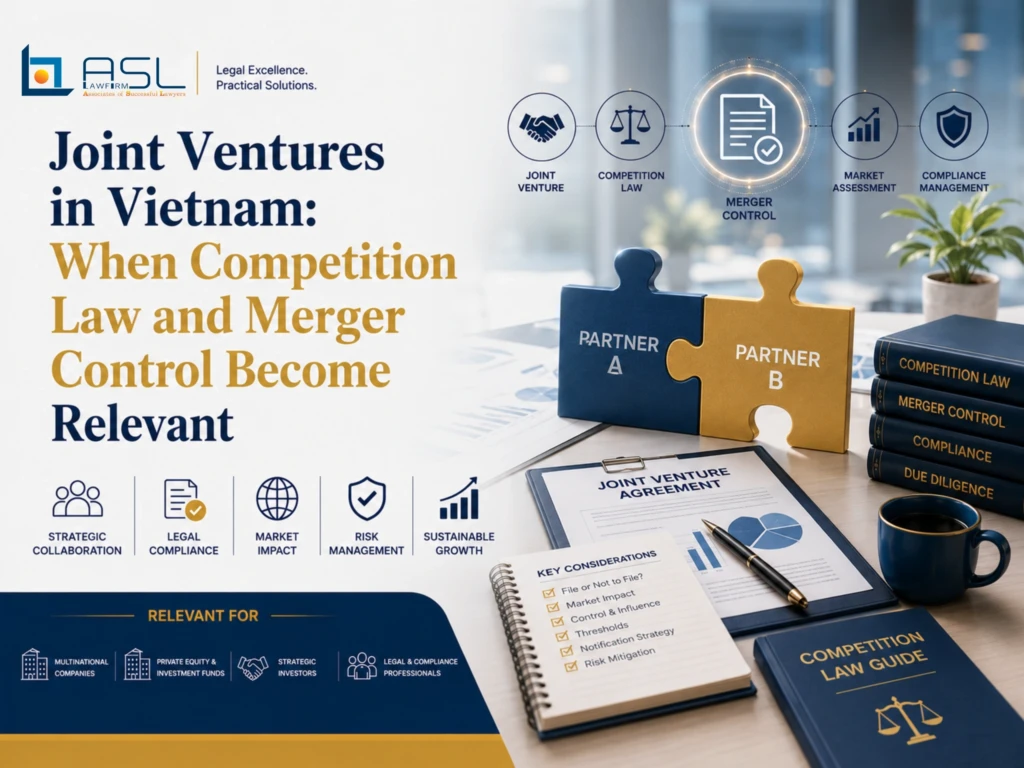
From 1 July 2026, Vietnam increased several financial thresholds for merger notification under Resolution No. 66.18/2026/NQ-CP, while keeping the 20% combined market share threshold unchanged. Under joint venture Vietnam competition law, a joint venture does not automatically require notification, but it should always be assessed before signing. Where a joint venture qualifies as an economic…

19
Jul
Jul
From 1 July 2026, Vietnam increased several financial thresholds for merger notification under Resolution No. 66.18/2026/NQ-CP. However, the 20% combined market share threshold remains unchanged. For foreign investor merger control Vietnam, the practical question is not only whether a transaction exceeds the new financial thresholds, but also whether the acquisition, joint venture or restructuring falls…

21
Jul
Jul
From 1 July 2026, the rules on merger notification Vietnam 2026 changed under Resolution No. 66.18/2026/NQ-CP. The short answer is no, not every transaction requires notification, but every serious M&A transaction or joint venture should be assessed for economic concentration notification Vietnam before signing. Although several financial thresholds have been increased, the Vietnam 20% market…

23
Jul
Jul
From 1 July 2026, the Vietnam merger control thresholds 2026 introduced under Resolution No. 66.18/2026/NQ-CP have significantly revised the Vietnam merger filing thresholds. Most financial thresholds for economic concentration Vietnam have been increased, while the 20% combined market share threshold remains unchanged. For investors, the practical issue is no longer simply whether a transaction exceeds…
21
Jun
Jun
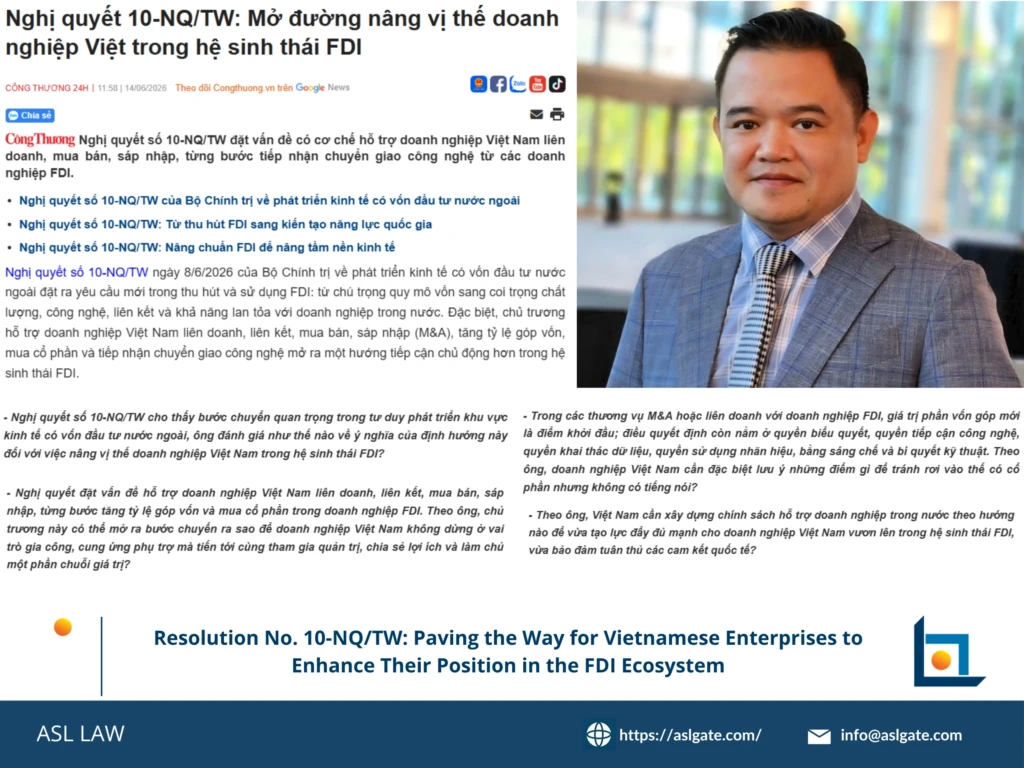
(Published in Newspaper of Industry and Trade) Resolution No. 10-NQ/TW introduces mechanisms to support Vietnamese enterprises in joint ventures, mergers and acquisitions, and the gradual absorption of technology transferred from foreign-invested enterprises. Resolution No. 10-NQ/TW, issued by the Politburo on June 8, 2026, concerning the development of the foreign-invested sector, sets out a new approach…
19
Jul
Jul
Payment disputes in Vietnam’s construction sector often arise from the intersection of contractual obligations, project schedule pressures, and acceptance procedures, rather than merely from one party’s refusal to make payment. In practice, contractors’ unpaid payment claims commonly emerge when projects enter stages characterized by cash flow constraints, final account settlement, or the allocation of responsibility…

18
Jul
Jul
Inheritance property disputes are among the most common and complex types of civil disputes in Vietnam, particularly as the value of assets such as land use rights, residential housing, and business assets continues to increase. These disputes not only affect the rights and interests of heirs but also have a direct impact on family relationships…
04
Jul
Jul
Mediation is increasingly becoming a strategic choice for resolving international commercial disputes. However, its true value lies not in reaching a settlement, but in its ability to transform that settlement into an effectively enforceable instrument. As Vietnam continues its deep international integration, improving the legal framework governing mediation is not only an internal necessity but…
15
Jul
Jul
The right to pregnancy and maternity rights of female employees are fundamental personal rights closely associated with the principle of substantive gender equality in employment relationships. Female employees are not only a direct productive force in the economy but also undertake the social function of reproduction through childbirth and the nurturing of future generations. This…
16
Jul
Jul
In practice, civil and commercial transactions in Vietnam increasingly involve situations where a single asset is simultaneously associated with the rights and interests of multiple parties. An asset may be owned by an individual or a business operating in Vietnam while also being mortgaged to a bank, entrusted to a repair or transportation service provider,…