Tiếng Việt
 中文 (中国)
 日本語
日本語
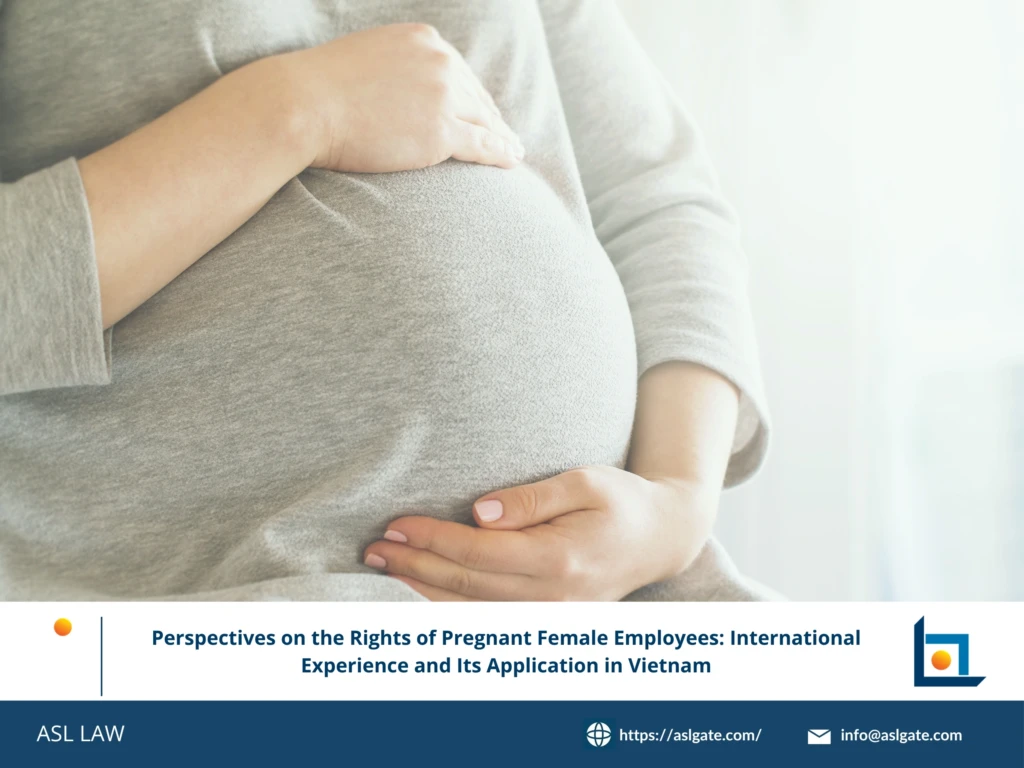
The right to pregnancy and maternity rights of female employees are fundamental personal rights closely associated with the principle of substantive gender equality in employment relationships. Female employees are not only a direct productive force in the economy but also undertake the social function of reproduction through childbirth and the nurturing of future generations. This intersection between economic and biological roles requires the law to establish special protection mechanisms to ensure that female employees are able to exercise their right to motherhood without discrimination or disadvantage in the workplace.
In practice, however, the biological characteristics of female employees are often regarded by employers as an “economic risk,” resulting in various subtle forms of discrimination. One of the most typical and serious manifestations is the imposition of “pregnancy restriction commitments” in various forms, such as clauses in employment contracts, separate agreements, or implicit requirements during recruitment, probation, or job assignment. Such commitments not only directly infringe upon reproductive autonomy—a fundamental and inviolable personal right—but also pose significant challenges to the principles of gender equality and the limits of contractual freedom in employment relationships.
Although Vietnamese labor law contains provisions prohibiting gender discrimination and protecting maternity rights, these provisions are primarily indirect in nature and do not comprehensively or directly regulate the practice of “pregnancy restriction commitments.” In this context, studying international experience, particularly that of China—a country sharing many institutional and cultural similarities with Vietnam while also facing the challenges of an aging population—is highly necessary. China has established a legal framework that strictly regulates this issue by declaring agreements restricting pregnancy rights absolutely void and creating strong enforcement mechanisms.
This article provides perspectives on the rights of pregnant female employees by analyzing the current legal framework in Vietnam, comparing it with international experience (with a particular focus on China), and proposing appropriate recommendations for improving the legal framework, strengthening the protection of maternity rights for female employees in Vietnam, promoting substantive gender equality, and contributing to the sustainable development of the labor market.
Overview of the Rights of Pregnant Female Employees and the Challenges of “Pregnancy Restriction Commitments”
Female employees account for an increasingly large proportion of the workforce and occupy many important positions within the economy. However, due to their biological characteristics and maternal responsibilities, female employees continue to face numerous barriers regarding employment opportunities, career advancement, and working conditions. In a highly competitive labor market, employers generally hold a stronger bargaining position, making female employees more vulnerable to unfair treatment and forcing them to accept unfavorable conditions in order to retain their employment.
One of the most concerning manifestations is the practice whereby employers require or implicitly impose “pregnancy restriction commitments” on female employees for a specified period. A pregnancy restriction commitment in the employment context may be understood as an agreement between an employer and a female employee under which the employee agrees not to become pregnant or to postpone pregnancy during a specified period, typically in connection with recruitment, probation, professional training, or assignment to positions requiring workforce stability.
Such commitments may take various forms, including express clauses in employment contracts, separate written agreements, or conditional requirements in recruitment and personnel management practices. In substance, these are not ordinary contractual agreements by contract consultancy relating solely to work performance obligations, but rather direct interferences with personal rights—specifically, a woman’s right to motherhood and her reproductive autonomy.
The imposition of pregnancy restriction commitments not only seriously infringes upon the right to determine the timing of childbirth, the number of children, and birth spacing—rights recognized by Vietnamese law as inviolable—but also produces wide-ranging adverse consequences. From an individual perspective, such commitments affect female employees’ emotional well-being, family planning, and their ability to balance professional responsibilities with their roles as wives and mothers. From a societal perspective, they constitute a form of discrimination based on gender and maternity responsibilities, thereby exacerbating gender inequality within the labor market.
Accordingly, protecting the rights of pregnant female employees cannot be limited to general provisions prohibiting discrimination or providing maternity benefits. The law should clearly recognize “pregnancy restriction commitments” as a distinct legal issue and establish direct, comprehensive, and effective regulatory mechanisms to safeguard the legitimate rights and interests of female employees in the context of current socio-economic development.
Foreign investors conducting business in Vietnam should consider consulting ASL LAW for tailored Legal Advice on Business oversea that addresses their specific commercial and operational requirements.
International Experience in Protecting the Rights of Pregnant Female Employees – The Case of China
China shares many institutional and cultural similarities with Vietnam and is likewise facing the challenges associated with an aging population. The transition from the strict “one-child” policy to policies encouraging families to have “two children” and “three children” has made maternity an important factor affecting labor costs and workforce management for businesses operating in Vietnam.
Against this backdrop, Chinese law intervenes extensively to restrict contractual freedom in employment relationships in order to protect human rights, gender equality, and the rights of female employees. Its legal framework is founded upon constitutional recognition of the principle of gender equality, from which a multi-layered system of mandatory legal protections has developed. This system includes legislation prohibiting discrimination in recruitment and employment, provisions guaranteeing equal employment rights, special protections during maternity, mechanisms declaring unlawful contractual provisions void, and the automatic extension of employment contracts throughout the “three periods” (pregnancy, childbirth, and the period of raising a child under 12 months of age).
Recent legislative developments have shifted from broadly stated principles to the explicit enumeration of prohibited conduct, thereby significantly narrowing opportunities to circumvent the law.
Specifically, Chinese law strictly protects the rights of pregnant female employees throughout every stage of the employment relationship. During recruitment, the law absolutely prohibits practices such as giving preference to male applicants, inquiring about childbirth plans, requiring pregnancy testing, or imposing marital or childbirth conditions as recruitment criteria. During the performance of the employment contract, female employees receive absolute protection throughout the “three periods,” and employers are prohibited from reducing wages or allowances on maternity-related grounds. Any agreement whereby a female employee “voluntarily resigns” due to pregnancy is regarded as void.
Particularly during the termination stage, employers are prohibited from unilaterally terminating the employment contracts of pregnant female employees, even where the contract has expired or termination is based on economic reasons. Employment contracts made via contract consultancy are automatically extended until the conclusion of the “three periods.” Violations of these provisions result in stringent sanctions, including compulsory reinstatement, payment of full wages for the interruption period, and double compensation.
The enforcement mechanism is supported by a multi-layered system of sanctions combining administrative penalties, civil compensation, and the active role of the Women’s Federation in collective bargaining aimed at equalizing the costs associated with childbirth. Nevertheless, practical experience also demonstrates that prohibitive measures should be accompanied by policies supporting enterprises doing business in Vietnam in order to prevent more subtle forms of discrimination.
The Current Status of the Rights of Pregnant Female Employees in Vietnam and Recommendations for Improvement from the Perspective of International Experience
Vietnamese law has established a relatively solid foundation for protecting the rights of pregnant female employees through the incorporation of international conventions such as CEDAW and the ICESCR, together with Article 26 of the 2013 Constitution, which affirms gender equality as a constitutional principle. The amended Population Ordinance of 2025 further recognizes the right to decide the timing, number, and spacing of children as an inviolable right.
The 2019 Labor Code provides specific protective measures throughout each stage of the employment relationship. During recruitment, the law prohibits gender discrimination, requires the publication of lists of occupations harmful to reproductive functions, and guarantees the employee’s return to her previous position or an equivalent position after returning to work.
During the performance of the employment contract, pregnant female employees are entitled to be transferred to lighter work or have their working hours reduced from the seventh month of pregnancy (or the sixth month, depending on working conditions) without any reduction in salary. They also have the right to suspend or terminate the employment contract if continued work would adversely affect the health of the fetus. Maternity benefits are guaranteed through the social insurance system, including benefits for male employees whose wives give birth. Upon termination of employment, Articles 122 and 137 of the 2019 Labor Code strictly prohibit employers from unilaterally terminating employment contracts on the grounds of pregnancy, maternity leave, or raising a child under 12 months of age, while also rendering invalid any agreements that are contrary to the provisions of the law.
However, the current legal framework still contains several important limitations. At present, there are no direct and specific legal provisions regulating the practice of “pregnancy restriction commitments,” creating a legal gap that allows implicit agreements to occur easily, particularly in small and medium-sized enterprises. Existing sanctions are also insufficiently stringent to serve as an effective deterrent, meaning that the rights of pregnant female employees are not yet protected comprehensively and effectively. From the perspective of China’s experience, Vietnam should improve its legal framework in several respects.
First, specific legal provisions should be developed to provide a clear definition of pregnancy restriction commitments, identify their various forms, and declare absolutely void all agreements that infringe upon the right to pregnancy. Second, preferential policies should be introduced to support small and medium-sized enterprises, particularly through tax reductions or by allowing the social insurance system to cover part of the costs associated with training temporary replacement personnel, thereby reducing the financial burden on employers.
Third, the Civil Procedure Code should be amended to authorize the People’s Procuracy and the Vietnam Women’s Union to initiate civil proceedings in the public interest against acts of gender discrimination. Fourth, deterrent sanctions should be strengthened by increasing monetary penalties, requiring public apologies, publishing information concerning violations, and imposing additional measures such as lowering labor compliance ratings or temporarily suspending recruitment in cases of repeated violations. The application of international experience should be carried out flexibly and in a manner appropriate to Vietnam’s socio-economic conditions, with the objective of protecting the rights of pregnant female employees in a substantive and sustainable manner.
Conclusion
Protecting the rights of pregnant female employees is not merely a matter of safeguarding a vulnerable group but also reflects the level of progress, humanity, and fairness of Vietnam’s labor law system. Through a comparative analysis of the domestic legal framework and international experience, particularly China’s stringent regulatory model, it is evident that although Vietnamese law has established fundamental provisions on gender equality and maternity protection, a significant legal gap remains with respect to the direct regulation of pregnancy restriction commitments.
Such agreements, whether explicit or implicit, seriously infringe upon reproductive autonomy—a fundamental personal right—and exacerbate gender inequality in the labor market. To address this limitation, Vietnam should promptly establish a specific legal framework declaring all forms of pregnancy restriction commitments absolutely void while simultaneously introducing support policies for small and medium-sized enterprises to help share the costs associated with childbirth.
Granting the People’s Procuracy and the Vietnam Women’s Union the authority to initiate legal proceedings in the public interest, together with strengthening sufficiently deterrent sanctions, would enhance the effectiveness of legal enforcement and enable female employees to embrace motherhood with greater confidence, free from concerns about discrimination or retaliation.
In conclusion, improving the legal framework governing the rights of pregnant female employees requires a shift from a passive approach to one that is more proactive and comprehensive, with the State playing a central role through economic instruments, enforcement mechanisms, and the sharing of social responsibility. Only when women’s reproductive role is recognized not as an “economic risk” but as an essential component of sustainable development can Vietnam’s labor market truly achieve substantive gender equality, ensure social security, and establish a solid foundation for the country’s long-term development.
ASL Law is a leading full-service and independent Vietnamese law firm made up of experienced and talented lawyers. ASL Law is ranked as the top tier Law Firm in Vietnam by Legal500, Asia Law, WTR, and Asia Business Law Journal. Based in both Hanoi and Ho Chi Minh City in Vietnam, the firm’s main purpose is to provide the most practical, efficient and lawful advice to its domestic and international clients. If we can be of assistance, please email to [email protected].
ASL LAW is the top-tier Vietnam law firm for Employment and Labor Law. If you need any advice, please contact us for further information or collaboration.