Tiếng Việt
 中文 (中国)
 日本語
日本語
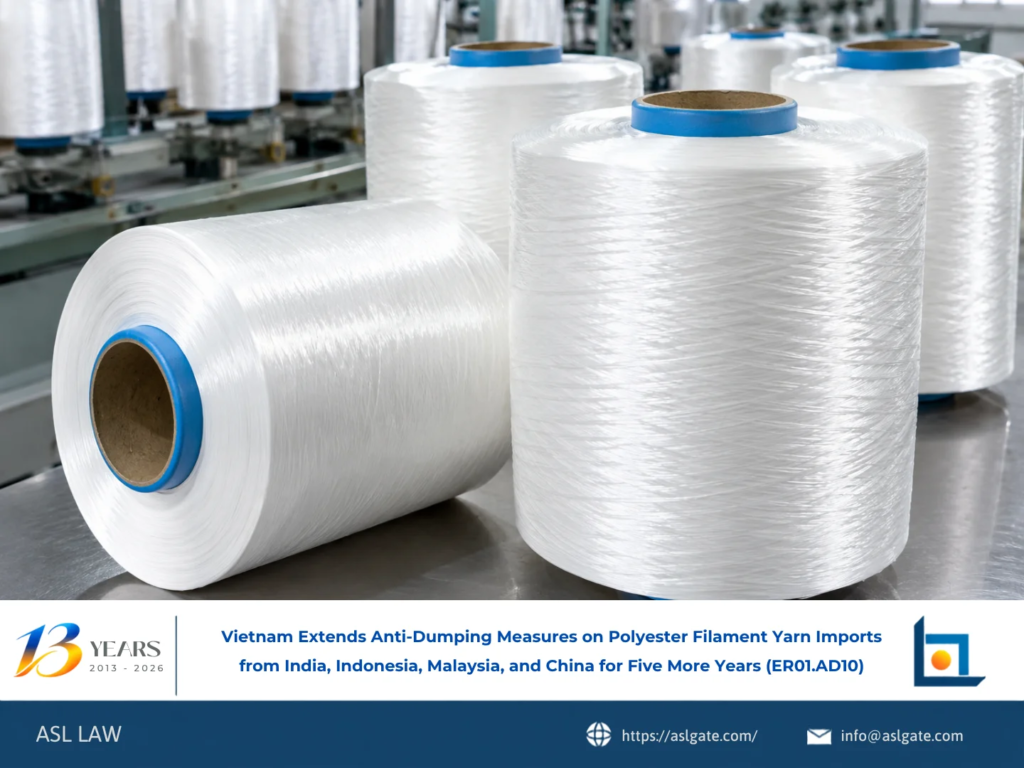
On October 13, 2026, the Ministry of Industry and Trade issued Decision No. 2652/QD-BCT announcing the results of the expiry review of anti-dumping measures on polyester filament yarn originating from India, Indonesia, Malaysia, and China. Based on the review findings, the anti-dumping measures have been extended for an additional five years to prevent the continuation or recurrence of dumping that could cause injury to the domestic industry.
Effectiveness of Anti-Dumping Measures in Supporting the Domestic Industry
Anti-dumping measures on polyester filament yarn were officially imposed by the Ministry of Industry and Trade in 2021 under Decision No. 2302/QD-BCT. Subsequently, on October 16, 2025, the Ministry issued Decision No. 3013/QD-BCT initiating an expiry review of these measures.
According to the review findings, the anti-dumping measures have contributed to creating a fairer competitive environment, enabling the domestic yarn industry to maintain its production and business operations. During the period in which the measures were in force, import volumes from India, Indonesia, and Malaysia declined significantly compared with the beginning of the review period.
The measures have also enabled domestic enterprises to continue investing, expanding production capacity, and developing new manufacturing facilities. Total domestic finished-product output increased, contributing to the industry’s ability to supply yarn to the market.
Furthermore, maintaining domestic yarn production has helped safeguard employment and workers’ incomes while supporting the textile and garment value chain. This has been achieved by supplying raw materials for downstream manufacturing processes and generating demand for related raw material suppliers and service providers.
Risk of Injury if the Measures Are Terminated
Although certain indicators of the domestic industry have improved, the investigating authority determined that a risk of material injury would remain if the anti-dumping measures were terminated.
During the review period, imports from India, Indonesia, Malaysia, and China continued to be found to be dumped in Vietnam. Notably, import volumes from the countries under investigation continued to increase, particularly imports originating from China.
Without anti-dumping duties, import volumes could rise rapidly at low prices, placing competitive pressure on domestic products through price undercutting, price depression, and price suppression.
In addition, the domestic industry continued to experience unfavorable developments in several indicators, including output, capacity utilization, market share, inventories, profits, labor productivity, investment, and cash flow. These factors indicate that the domestic industry remains at risk of further injury if the measures are terminated.
The investigating authority also noted that China has substantial production and export capacity for polyester filament yarn. Meanwhile, certain third-country markets have imposed trade remedies on the products covered by the review, increasing the risk of trade diversion toward Vietnam.
Vietnam Extends Anti-Dumping Measures for Another Five Years
Based on the investigation findings and injury assessment, the investigating authority concluded that terminating the measures could lead to the continuation or recurrence of dumping and cause injury to the domestic industry.
After the draft review findings were circulated to interested parties for comments in accordance with applicable regulations, the Ministry of Industry and Trade issued Decision No. 2652/QD-BCT on October 13, 2026, extending the anti-dumping measures on polyester filament yarn originating from India, Indonesia, Malaysia, and China for an additional five years.
Following the decision’s entry into force, the Ministry of Industry and Trade will coordinate with relevant regulatory authorities to inspect, monitor, and supervise the implementation of the measures. This process will be based on information provided by customs authorities concerning imports subject to anti-dumping duties, pursuant to Article 18 of the Government’s Decree No. 86/2025/ND-CP dated April 11, 2025.
Manufacturers, importers, and other interested parties should monitor the implementation of the decision and assess any changes that may affect their import, export, and business activities involving polyester filament yarn in Vietnam.
To protect their legitimate interests, manufacturers and exporters should familiarize themselves with the procedure and actively contact Vietnam Antidumping Law Firm specializing in anti-dumping and trade remedy for timely assistance.
ASL Law is a leading full-service and independent Vietnamese law firm made up of experienced and talented lawyers. ASL Law is ranked as the top tier Law Firm in Vietnam by Legal500, Asia Law, WTR, and Asia Business Law Journal. Based in both Hanoi and Ho Chi Minh City in Vietnam, the firm’s main purpose is to provide the most practical, efficient and lawful advice to its domestic and international clients. If we can be of assistance, please email to [email protected].
ASL LAW is the top-tier Vietnam law firm for Anti-dumping & countervailing. If you need any advice, please contact us for further information or collaboration.