Tiếng Việt
 中文 (中国)
 日本語
日本語
Vietnam has become one of the leading destinations in Asia for foreign investors seeking growth, efficiency, and long-term potential. However, forming a company in Vietnam requires proper preparation, especially when it comes to legal paperwork. This article explains the essential legal documents, compliance requirements, and practical steps that businesses must prepare to successfully complete the…
29
Nov
Nov
Investing abroad presents significant opportunities for Vietnamese businesses, but it also comes with complex legal challenges. Understanding potential legal risks and implementing preventive measures is critical to ensuring sustainable growth and avoiding disputes. This article outlines the key risks, strategies for prevention, and practical guidance for companies engaged in overseas investment. Enterprises doing business in…
29
Nov
Nov
Setting up a presence in Vietnam can be challenging for foreign businesses due to regulatory complexities and oversea investment requirements. For companies seeking to explore the Vietnamese market without establishing a full-scale subsidiary, representative offices offer a practical legal solution. This guide explains the advantages, requirements, and procedures for establishing and operating a representative office…
24
Nov
Nov
In today’s competitive business environment, Vietnamese companies are increasingly exploring legal outsourcing as a strategic solution. Understanding when to adopt a Outsourced Legal Services model allows enterprises doing business in Vietnam to optimize costs, enhance legal compliance, and focus on core operations while leveraging expert legal support. Understanding the Legal Outsourcing model Legal outsourcing involves…
06
Nov
Nov
In the era of digital globalization, enterprises doing business in Vietnam are increasingly turning to e-commerce platforms to reach international customers. However, this expansion also brings heightened risks of brand misuse, imitation, and infringement. Protecting trademarks effectively on global platforms has become a crucial part of every business strategy aiming for sustainable growth in the…
01
Dec
Dec
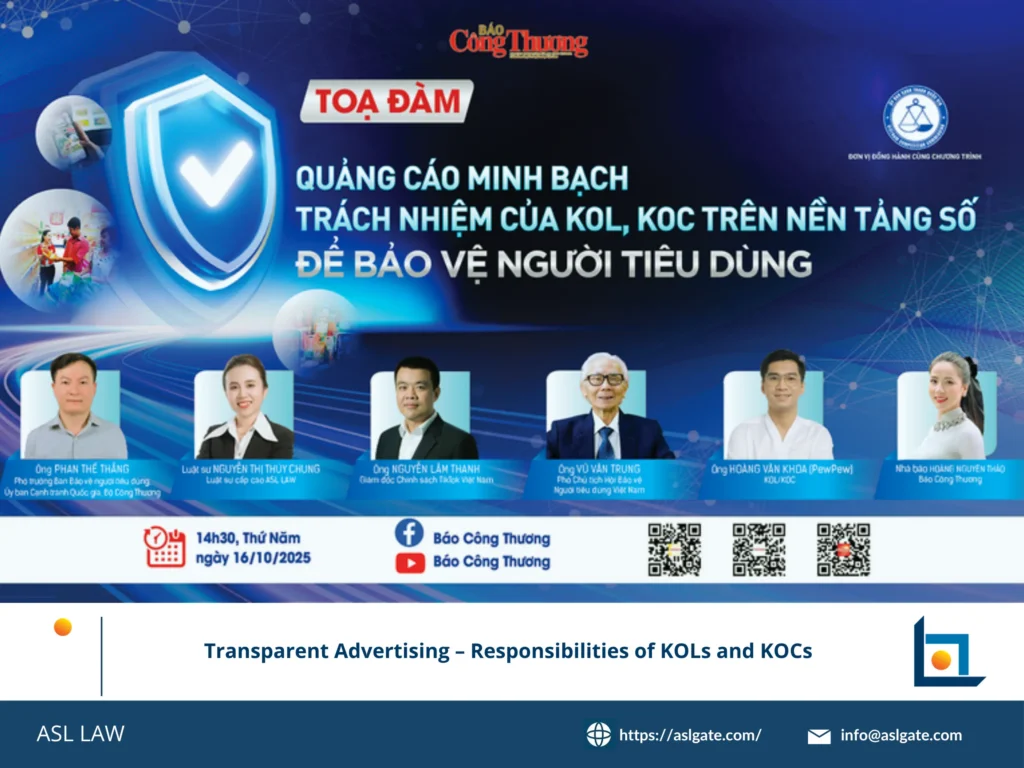
In the context of the rapidly expanding online advertising landscape, transparency and legal responsibility in content created by KOLs and KOCs have become top concerns. As a specialized legal advisor in commerce and consumer protection, ASL LAW, Vietnam full Service law firm joined the seminar “Transparent Advertising – Responsibilities of KOLs and KOCs,” represented by…
26
May
May
Transfer pricing continues to be one of the most complex compliance challenges for enterprises doing business in Vietnam. As global tax authorities intensify scrutiny on cross-border transactions, enterprises must navigate not only financial implications but also significant legal risks. Understanding Vietnam’s transfer pricing regulations and implementing robust compliance solutions is essential to avoid penalties and…

17
May
May
Renewable energy is becoming one of the most promising investment sectors in Vietnam. As the country aims to achieve net-zero emissions by 2050, the legal framework for renewable energy projects has evolved significantly. Investors and enterprises doing business in Vietnam entering this sector must clearly understand the legal procedures, licensing requirements, and regulatory environment that…
05
Nov
Nov
In Vietnam’s fast-evolving financial landscape, effective financial risk management has become a cornerstone for the stability and sustainability of the banking industry. As regulatory frameworks become more complex and cross-border transactions more frequent, legal advisory plays an increasingly vital role in guiding banks through compliance, contractual, and risk mitigation challenges. 1. Understanding Financial Risk in…
08
Jul
Jul
In today’s fast-moving business world, a single contract mistake can lead to major legal disputes or financial losses. Understanding the most common errors in contract drafting and negotiation is essential for Vietnamese companies and foreign investors operating in Vietnam. This article highlights the top seven mistakes in business contracts and practical tips to avoid them….