Tiếng Việt
 中文 (中国)
 日本語
日本語
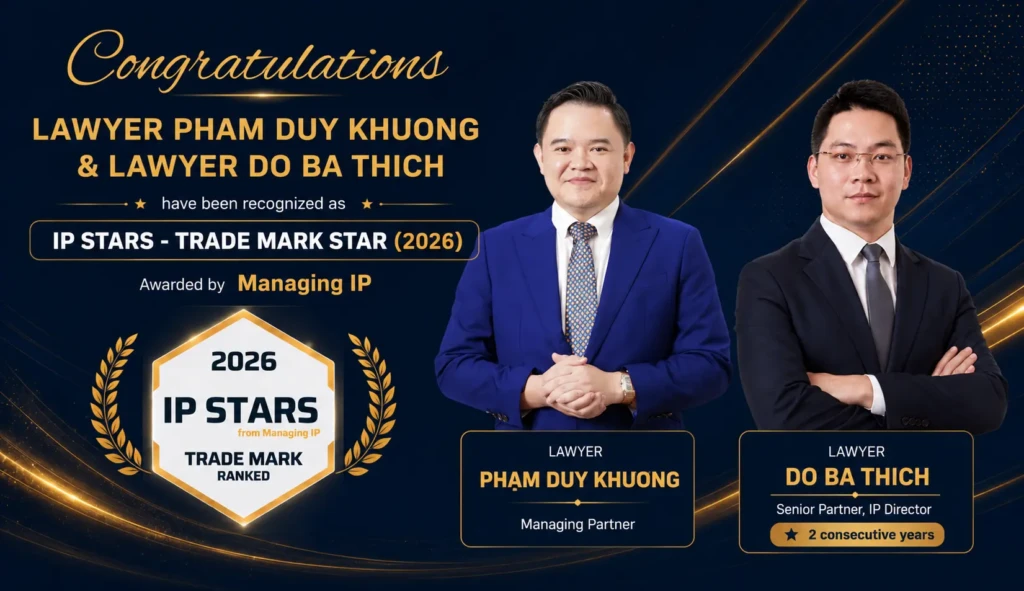
According to the latest announcement by Managing IP, the internationally recognized organization specializing in the assessment and ranking of law firms and lawyers in the field of intellectual property services, Managing Partner Pham Duy Khuong and Senior Partner Do Ba Thich of ASL LAW have once again been recognized as Trade mark Stars in IP…
20
Jul
Jul
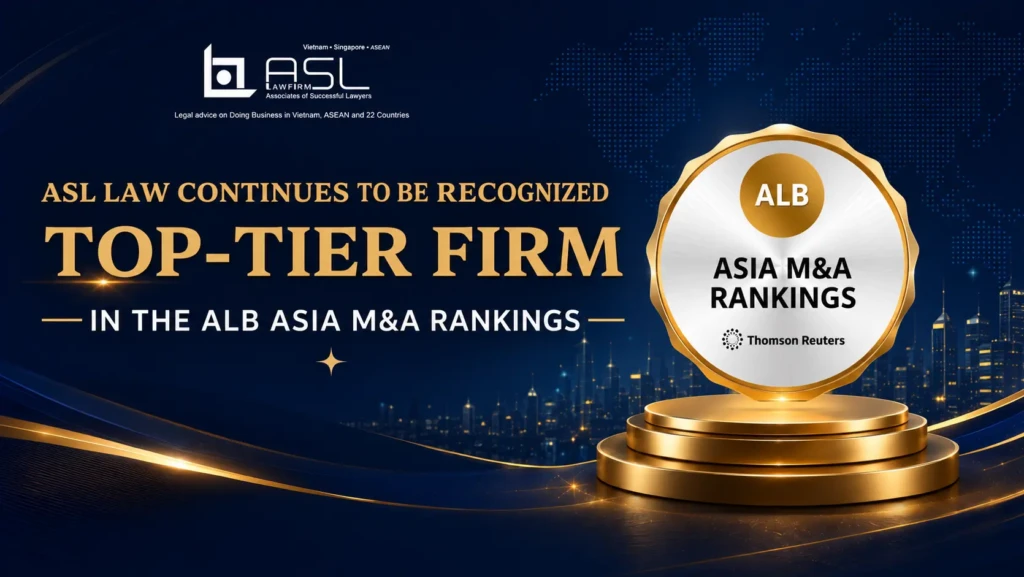
According to the latest announcement by Asian Legal Business (ALB), the prestigious legal publication under Thomson Reuters, ASL LAW has been recognized as a Top-Tier Firm in Vietnam for Mergers & Acquisitions (M&A) in the ALB Asia M&A Rankings. The ALB Asia M&A Rankings is one of the leading practice-area rankings followed by the legal…
15
Jul
Jul
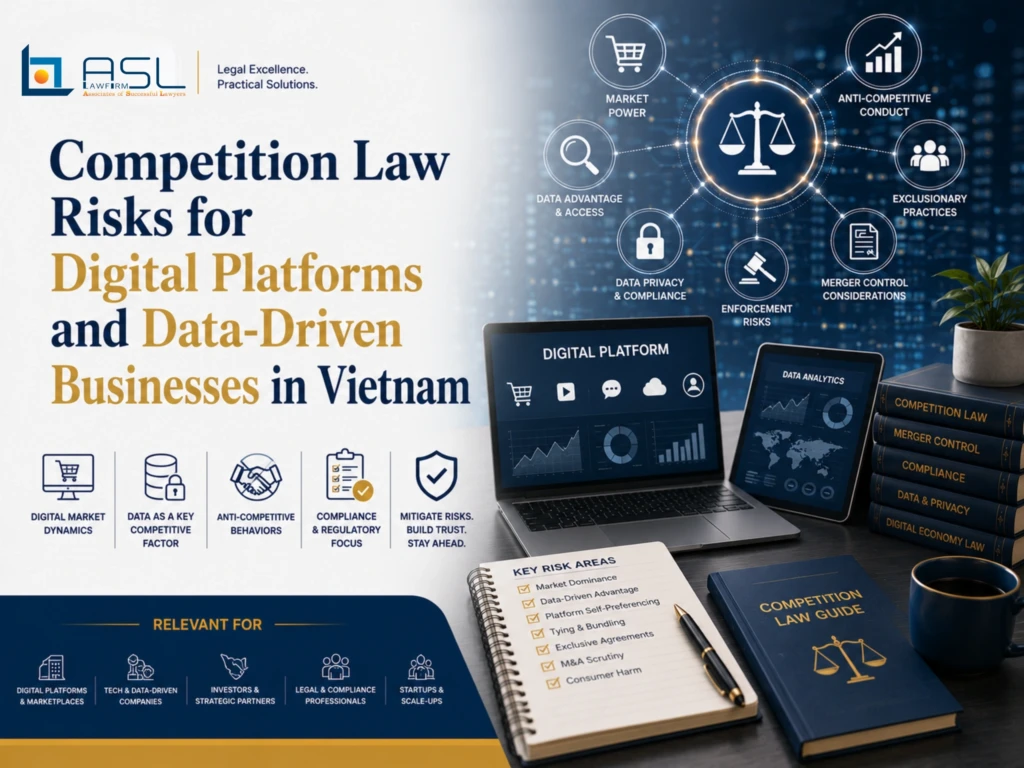
From 1 July 2026, Resolution No. 66.18/2026/NQ-CP increased several financial thresholds for merger notification while keeping the 20% combined market share threshold unchanged. Although these amendments mainly affect merger notification, they also reflect the continuing development of competition law Vietnam. For digital businesses, antitrust compliance Vietnam is no longer limited to transaction size or market…
17
Jul
Jul
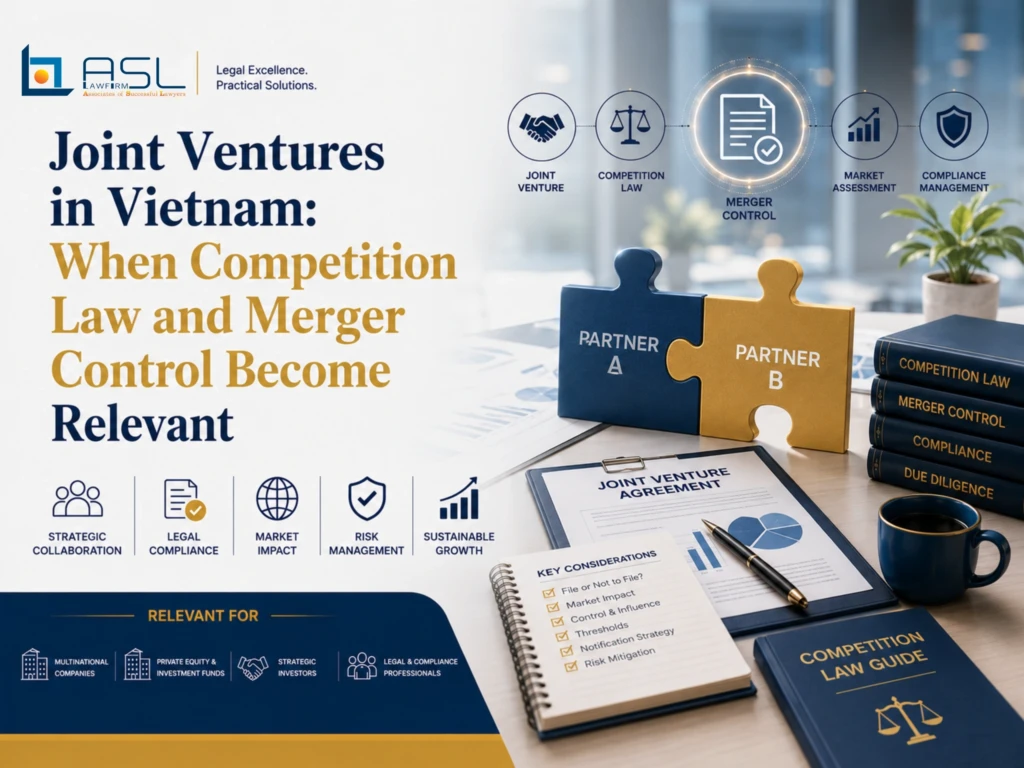
From 1 July 2026, Vietnam increased several financial thresholds for merger notification under Resolution No. 66.18/2026/NQ-CP, while keeping the 20% combined market share threshold unchanged. Under joint venture Vietnam competition law, a joint venture does not automatically require notification, but it should always be assessed before signing. Where a joint venture qualifies as an economic…

19
Jul
Jul
From 1 July 2026, Vietnam increased several financial thresholds for merger notification under Resolution No. 66.18/2026/NQ-CP. However, the 20% combined market share threshold remains unchanged. For foreign investor merger control Vietnam, the practical question is not only whether a transaction exceeds the new financial thresholds, but also whether the acquisition, joint venture or restructuring falls…

21
Jul
Jul
From 1 July 2026, the rules on merger notification Vietnam 2026 changed under Resolution No. 66.18/2026/NQ-CP. The short answer is no, not every transaction requires notification, but every serious M&A transaction or joint venture should be assessed for economic concentration notification Vietnam before signing. Although several financial thresholds have been increased, the Vietnam 20% market…

23
Jul
Jul
From 1 July 2026, the Vietnam merger control thresholds 2026 introduced under Resolution No. 66.18/2026/NQ-CP have significantly revised the Vietnam merger filing thresholds. Most financial thresholds for economic concentration Vietnam have been increased, while the 20% combined market share threshold remains unchanged. For investors, the practical issue is no longer simply whether a transaction exceeds…
06
Jul
Jul
On 3 July 2026, the Ministry of Industry and Trade (MOIT) issued Decision No. 1635/QĐ-BCT extending the duration of the sunset review investigation concerning the anti-dumping measures currently imposed on polyester filament yarn originating in India, Indonesia, Malaysia, and China (Case No. ER01.AD10). Case Background The sunset review was initiated by the MOIT under Decision…

05
Jul
Jul
Following the issuance of Decision No. 1453/QĐ-BCT dated 19 June 2026 by the Ministry of Industry and Trade (MOIT) initiating the sunset review of the anti-dumping measures imposed on certain welding materials originating in Malaysia, Thailand, and China (Case No. ER01.AD15), the Trade Remedies Authority of Vietnam (TRAV) has released the review questionnaire for the…
Litigation and dispute resolution, Marriage & Family Law, Contract, Tax Law, Anti-Dumping & Countervailing, Real Estate and Construction Law, M&A, Employment & Labor, Banking & Finance, Franchise, Investment Law, Business, Career, News, Our Activities
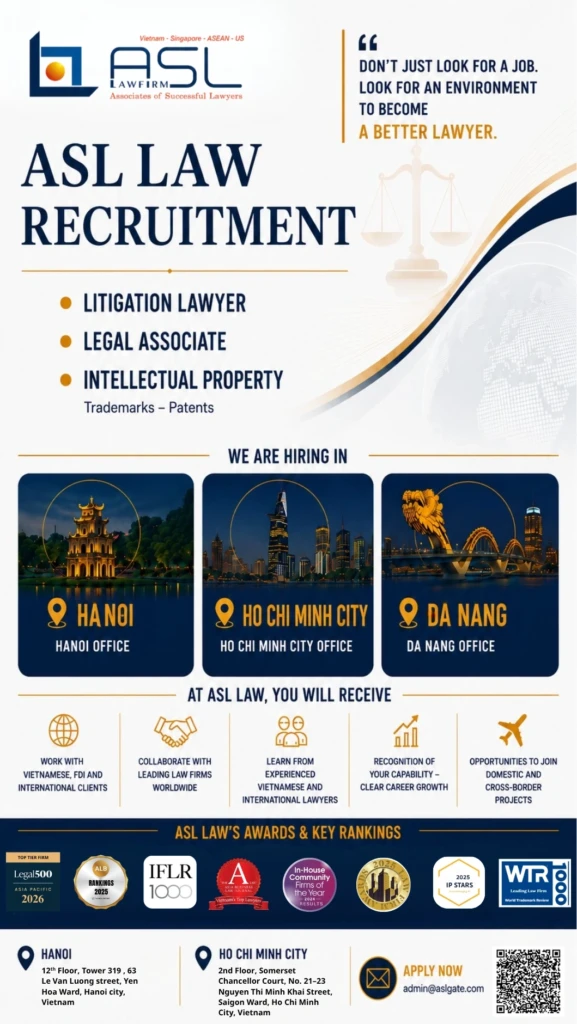
ASL LAW Is Hiring Lawyers & Legal Associates in Hanoi – Ho Chi Minh City – Da Nang
16
Jul
Jul
ASL LAW is a leading independent Vietnam full Service law firm, consistently recognized by prestigious international legal ranking organizations, including Legal500, ASIA LAW, IFLR, ALB, WTR, IP Stars, and Asia Business Law Journal, across a broad range of practice areas such as M&A, Intellectual Property, Data privacy, Corporate, Dispute Resolution, Trade Remedies, Employment, and Tax….