Tiếng Việt
 中文 (中国)
 日本語
日本語
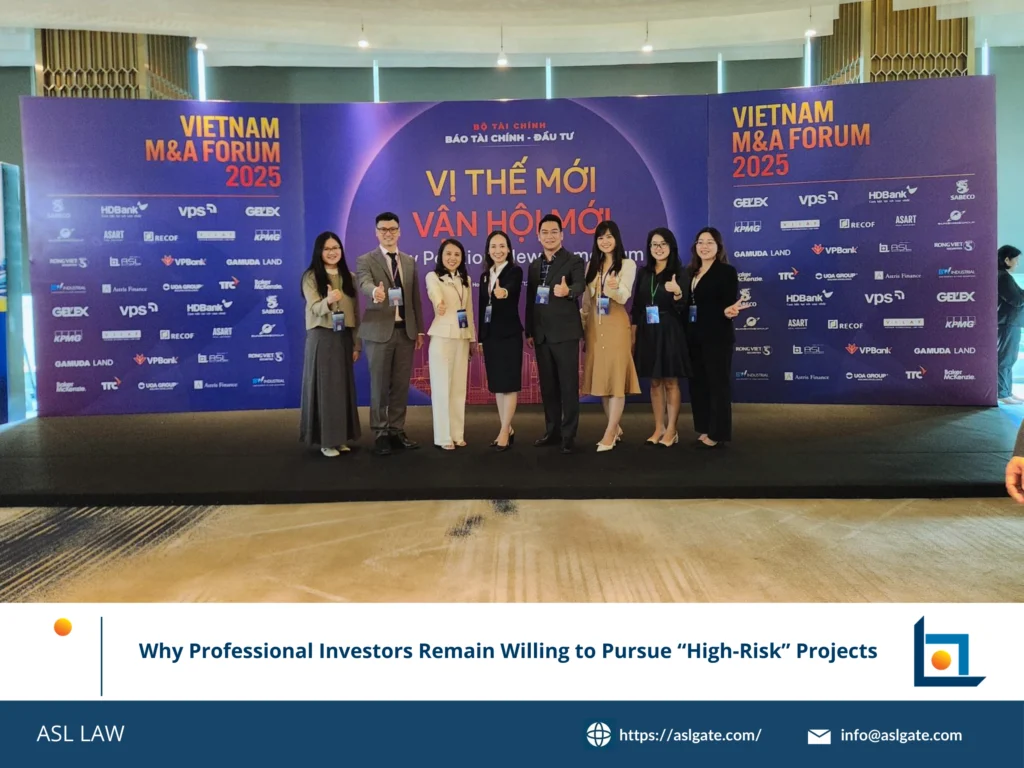
In a legal environment that remains challenging and marked by complex investment procedures, many large-scale projects in Vietnam—particularly in the energy, infrastructure, and industrial sectors—are often categorized as “high risk.” In practice, however, institutional investors and foreign strategic investors continue to actively pursue such projects.
This reflects an investment logic that differs from short-term thinking, where risk is not a deterrent but rather a variable that must be accurately assessed and priced.
Analyzing the mindset and strategy of foreign investors

Foreign investors, especially large offshore investment funds and multinational corporations, typically approach the Vietnamese market with a medium- to long-term perspective. Rather than focusing solely on immediate challenges, they assess the overall picture, including market size, growth rates, Vietnam’s role in regional supply chains, and the Government’s long-term development orientation.
For this group of investors, legal hurdles or prolonged procedures are not unusual in emerging markets. More importantly, their focus lies in risk controllability, transparency, and the potential to enhance project value after restructuring or legal completion.
“High risk – high return”: the logic of institutional investors
From the perspective of institutional investors, risk and return are always intertwined. Projects with “clean” records, complete legal documentation, and stable cash flows are often already priced at high levels by the market, leaving limited room for long-term upside.
Conversely, M&A projects facing legal, timing, or financial structure challenges are often offered at prices below their intrinsic potential value. If investors possess sufficient legal, financial, and governance capabilities to resolve these bottlenecks, the subsequent value uplift becomes the “reward” for accepting risk at an early stage.
Why energy, infrastructure, and industry remain priority sectors
Energy, infrastructure, and industry are foundational to economic growth and are typically linked to long-term national planning. Despite higher legal risks and procedural complexity, these sectors benefit from stable demand, long project life cycles, and the ability to generate sustainable cash flows.

For foreign investors, early participation in large-scale projects within these sectors helps secure a strategic foothold—particularly as the market moves toward a more complete legal framework and standardized procedures. This is precisely why “difficult” projects can be especially attractive to professional investors.
Lawyer Pham Duy Khuong’s perspective on the concept of “risk premium”
According to Mr. Pham Duy Khuong, Managing Partner of ASL LAW, institutional investors consistently factor in the concept of “risk premium” in M&A Deals —the additional return required to compensate for the level of risk assumed. In sectors such as energy, infrastructure, and industry, the risk premium is often higher due to legal complexity and extended implementation timelines.
However, Mr. Khuong emphasizes that it is precisely this risk premium that attracts professional investors. Those with sufficient experience and patience are able to identify long-term value beyond short-term legal barriers, provided that risks are properly identified and supported by effective risk mitigation strategies.
What Vietnamese enterprises can do to reduce risk and enhance valuation
From the perspective of Vietnamese enterprises, being perceived as “high risk” does not necessarily deter investors, but it does directly affect valuation and bargaining position. To improve this situation, enterprises need to proactively review and enhance the legal readiness of their projects, improve documentation transparency, and establish a clear roadmap to address outstanding legal issues.

In addition, standardizing governance, financial management, and project data enables investors to more accurately assess risk, thereby reducing valuation discounts during negotiations. When enterprises demonstrate strong risk management capabilities, “challenging” projects not only retain their appeal but can also become value-enhancing opportunities in the eyes of professional investors.
At the Vietnam M&A Forum 2025, ASL LAW continues to reaffirm its leading position in the M&A advisory sector by being honored as the Outstanding M&A Advisory Firm Of The Year 2024–2025. Previously, the firm was awarded the title of Outstanding M&A Advisors Of 2009–2023 – a distinction summarizing 15 years of consistent and sustainable professional practice – and recently, Outstanding M&A Advisors Of 2023–2024.
ASL Law is a leading full-service and independent Vietnamese law firm made up of experienced and talented lawyers. ASL Law is ranked as the top tier Law Firm in Vietnam by Legal500, Asia Law, WTR, and Asia Business Law Journal. Based in both Hanoi and Ho Chi Minh City in Vietnam, the firm’s main purpose is to provide the most practical, efficient and lawful advice to its domestic and international clients. If we can be of assistance, please email to [email protected].
ASL LAW is the top tier M&A law firm in Vietnam. If you need any advice, please contact us for further information or collaboration.