Tiếng Việt
 中文 (中国)
 日本語
日本語
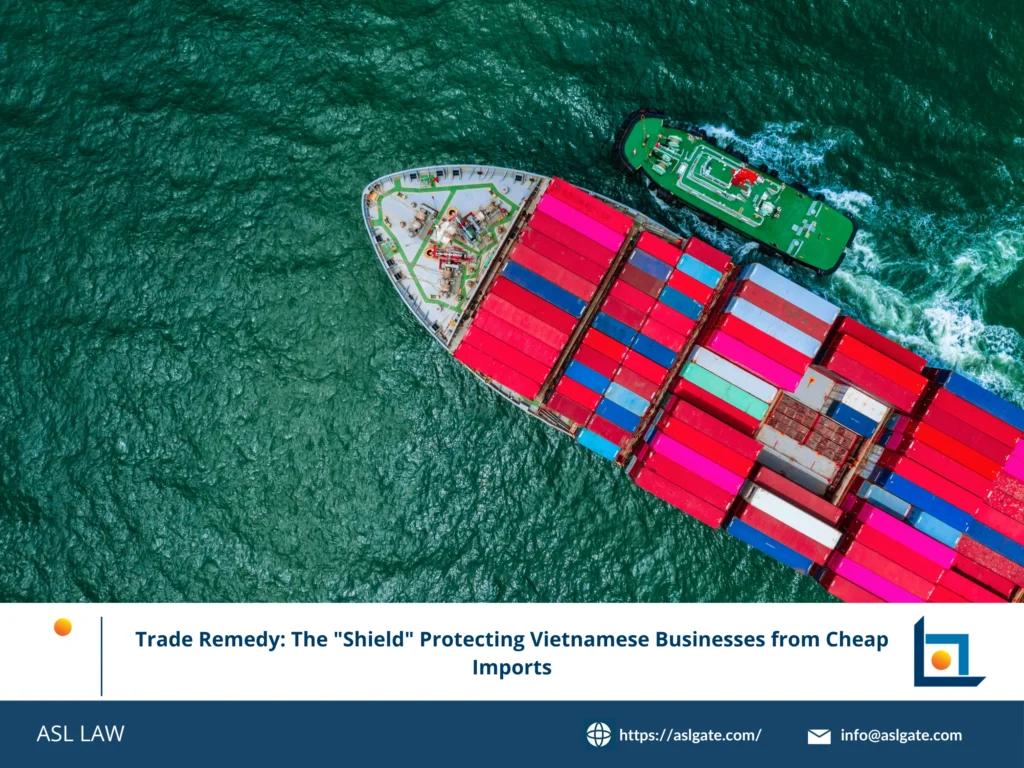
In the context of global trade competition, Vietnam’s open economy faces increasing pressure from imported goods sold at unfairly low prices. These challenges can undermine domestic industries, reduce employment, and destabilize the market. Trade remedy measures—such as anti-dumping, anti-subsidy, and safeguard instruments—serve as a vital “shield” that protects enterprises doing business in Vietnam from cheap imports while ensuring fair competition and sustainable development.
This article provides an in-depth look at Vietnam’s trade remedy framework, its implementation process, and key notes for enterprises operating in import-sensitive sectors.
Understanding the Concept and Role of Trade Remedy in Vietnam
Trade remedy refers to legal measures that a country can apply to protect its domestic industries from the negative effects of unfair international trade practices. In Vietnam, these include anti-dumping, anti-subsidy, and safeguard measures. Each plays a distinct role in countering unfair competition, ensuring that domestic businesses can compete on equal footing with imported goods.
For Vietnamese enterprises, especially those in manufacturing and agriculture, trade remedy measures are an essential policy tool to stabilize production, maintain employment, and safeguard national economic security. They reflect Vietnam’s effort to balance open trade with legitimate protection of domestic industries.
Legal Framework Governing Trade Remedy in Vietnam
Vietnam’s trade remedy system is regulated under the Law on Foreign Trade Management 2017 and its guiding decrees. These laws provide the procedural foundation for conducting investigations, imposing duties, and reviewing existing measures. The Ministry of Industry and Trade (MOIT), through the Trade Remedies Authority of Vietnam (TRAV), is the competent body responsible for implementation.
Trade protection regulations Vietnam are designed to ensure compliance with World Trade Organization (WTO) rules while providing flexibility for Vietnam to respond to the unique challenges of its domestic economy. Transparency, procedural fairness, and evidence-based decision-making are key principles underpinning the legal framework.
Anti-Dumping and Anti-Subsidy Measures: The Core of Vietnam’s Trade Protection
Anti-dumping imports Vietnam investigations target cases where foreign producers sell goods below normal value, causing injury to Vietnamese industries. When dumping is proven, the MOIT may impose anti-dumping duties to restore fair competition.
Anti-subsidy measures, on the other hand, address situations where imported goods benefit from financial assistance or government support in the exporting country. These measures help neutralize artificial advantages and ensure a level playing field for domestic enterprises.
Together, these tools form the backbone of Vietnam’s trade remedy system, protecting local industries from distortions caused by unfair trade practices.
Trade Remedy Procedures: How Vietnamese Businesses Can Initiate Protection
Enterprises doing business in Vietnam that suspect injury from cheap imports can file a petition with the TRAV to request an investigation. The petition must contain evidence of dumping, subsidization, or sudden import surges, along with proof of material injury.
Once accepted, the MOIT conducts a thorough investigation, including data verification, hearings, and consultations. Provisional duties may be applied during the investigation to prevent further injury. This process is highly technical, requiring cooperation from enterprises, industry associations, and legal advisors.
For businesses, understanding trade remedy Vietnamese businesses Vietnam procedures is crucial to initiating effective protection. Proper documentation, industry coordination, and timely responses play a decisive role in the success of such cases.
How Trade Remedy Measures Protect Businesses from Cheap Imports
Trade remedy shield Vietnam mechanisms have proven to be effective in mitigating the impact of low-cost imports. By imposing duties on dumped or subsidized products, Vietnam ensures that imported goods reflect their true market value, thus protecting domestic manufacturers.
Beyond economic benefits, these measures also encourage innovation and competitiveness among Vietnamese enterprises. They act as a legal buffer, giving businesses time to restructure, upgrade technology, and adapt to evolving global standards.
Challenges and Future Outlook for Vietnam’s Trade Remedy Enforcement
Despite progress, several challenges remain. Many Vietnamese businesses lack awareness of trade remedy procedures, while others face difficulties in providing evidence or financial resources for investigations. Enhancing institutional capacity and improving coordination between the government and private sector are therefore critical.
Looking forward, as Vietnam deepens participation in global trade agreements, the use of trade remedy tools will become increasingly sophisticated. Enterprises must proactively monitor import trends, build legal knowledge, and engage with competent authorities to safeguard their market interests.
FAQ – Common Questions about Trade Remedy in Vietnam
1. What is the main purpose of trade remedy measures in Vietnam?
They aim to protect domestic industries from unfair competition and cheap imports that cause injury to local producers.
2. Which authority handles trade remedy cases in Vietnam?
The Trade Remedies Authority of Vietnam (TRAV) under the Ministry of Industry and Trade is responsible for investigations and enforcement.
3. How can Vietnamese businesses file a trade remedy petition?
Enterprises can submit a formal petition with supporting evidence to the TRAV, following the procedures prescribed under the Law on Foreign Trade Management.
4. What types of trade remedy measures are applied in Vietnam?
Vietnam applies anti-dumping, anti-subsidy, and safeguard measures to ensure fair trade conditions.
5. Are trade remedy measures consistent with international law?
Yes. Vietnam’s trade remedy system complies with WTO regulations and international best practices.
Conclusion
Trade remedy measures serve as the “shield” protecting Vietnamese businesses from cheap imports and unfair trade practices. By understanding and utilizing the trade remedy Vietnamese businesses Vietnam framework, enterprises can actively defend their interests, sustain competitiveness, and contribute to national economic stability. Legal professionals and industry associations play a key role in guiding businesses through these complex but vital procedures—ensuring that Vietnam continues to grow on a foundation of fairness and resilience.
To protect their legitimate interests, manufacturers and exporters should familiarize themselves with the procedure and actively contact Vietnam Antidumping Law Firm specializing in anti-dumping and trade remedy for timely assistance.
ASL Law is a leading full-service and independent Vietnamese law firm made up of experienced and talented lawyers. ASL Law is ranked as the top tier Law Firm in Vietnam by Legal500, Asia Law, WTR, and Asia Business Law Journal. Based in both Hanoi and Ho Chi Minh City in Vietnam, the firm’s main purpose is to provide the most practical, efficient and lawful advice to its domestic and international clients. If we can be of assistance, please email to [email protected].
ASL LAW is the top-tier Vietnam law firm for Anti-dumping & countervailing. If you need any advice, please contact us for further information or collaboration.