Tiếng Việt
 中文 (中国)
 日本語
日本語
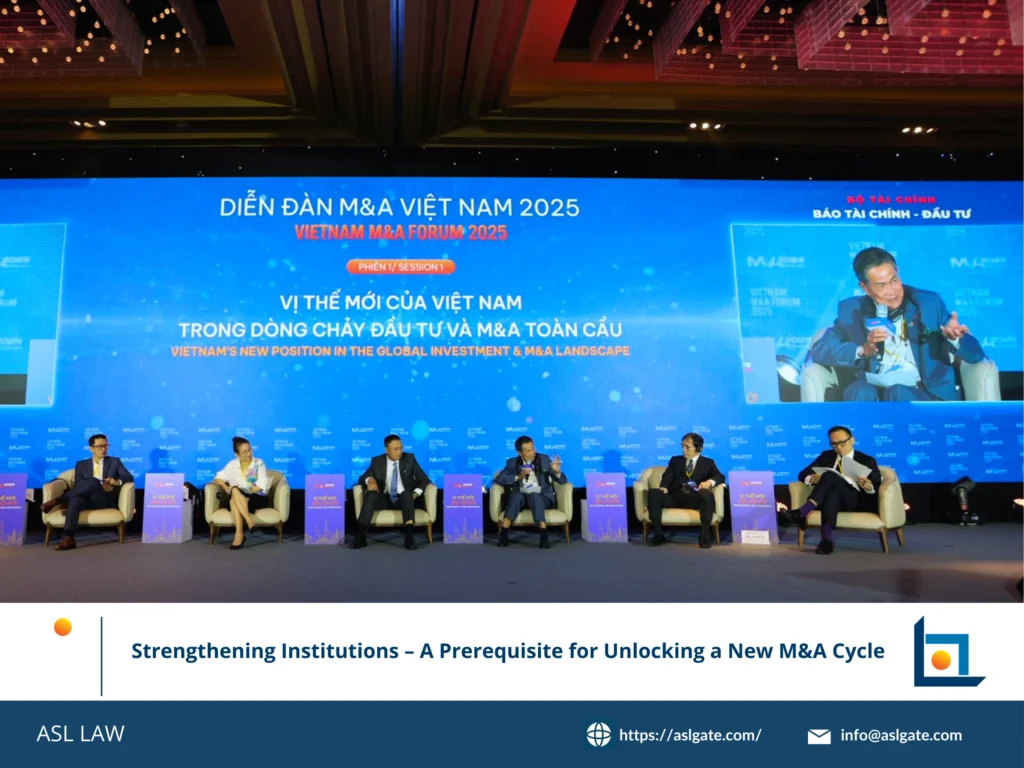
As global capital flows become increasingly selective, the competitiveness of an M&A market is no longer determined solely by market size or growth potential, but is increasingly shaped by institutional quality and the degree of certainty within the legal framework.
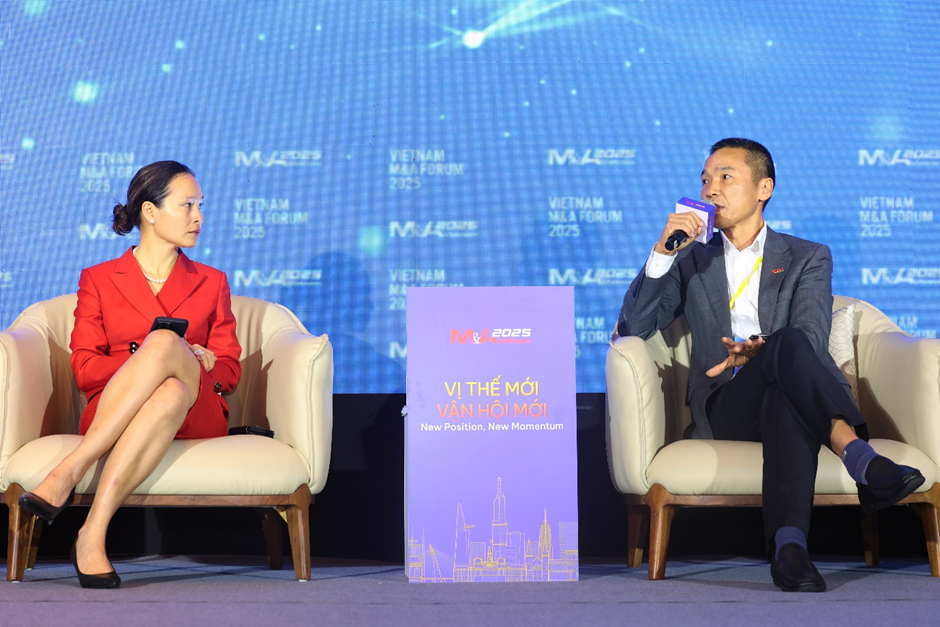
For Vietnam—where M&A activity is concentrated in foundational sectors such as infrastructure, energy, real estate, and industry—strengthening institutions is no longer a long-term aspiration, but has become a prerequisite for unlocking a new M&A cycle that is deeper and more sustainable.
Why the legal framework is a decisive factor in multi-sector M&A
M&A transactions in foundational sectors typically involve large-value assets, long project life cycles, and a high level of administrative involvement. Investors are not merely acquiring a company; in substance, they are “purchasing” the stability of the legal framework surrounding the project for many years, or even decades.
In this context, the legal environment becomes a decisive factor in whether investors of offshore investment are willing to deploy capital, whether they are prepared to pay a premium, or whether they will only proceed with significant discounts to hedge against legal risk. When legal predictability is low, all advantages in terms of market size and growth potential can be effectively neutralized.
Current challenges: inconsistency, overlap, and prolonged processes
Based on practical observations, one of the most significant barriers to M&A activity in Vietnam today lies in the lack of consistency within the legal system and its enforcement. The same project may be subject to differing interpretations and applications of regulations across localities or among competent authorities.

In addition, overlaps among sector-specific laws and implementing regulations often result in prolonged approval, adjustment, or project transfer processes, with no clear or predictable timelines. For international investors, such delays and uncertainty translate directly into higher opportunity costs and risks that are difficult to quantify.
Recommendations from Mr. Pham Duy Khuong on institutional reform
From an M&A advisory perspective, Mr. Pham Duy Khuong, Managing Partner of ASL LAW, believes that unlocking a new M&A cycle requires reform efforts to focus on three core pillars.
First, there must be greater harmonization of laws and implementing regulations to ensure that the same legal provisions are interpreted and applied consistently nationwide. Improved consistency allows investors to formulate long-term strategies and reduces unnecessary legal costs.

Second, complaint-handling, approval, and appraisal procedures should be standardized. Clear processes, predictable timelines, and effective coordination mechanisms among authorities would prevent large M&A transactions from becoming “stuck” due to administrative bottlenecks—an issue particularly critical for restructuring transactions and project transfers.
Third, project data transparency must be enhanced. According to Mr. Khuong, when information on legal status, planning, land use, and financial obligations is disclosed and standardized, information asymmetry between buyers and sellers is significantly reduced, thereby enabling transactions to proceed more quickly and efficiently.
Impact of successful institutional reform
If these reforms are implemented in a coordinated manner, their positive impact on the M&A market would be clearly visible. Transaction timelines would shorten, legal costs would decline, and overall market confidence would increase.
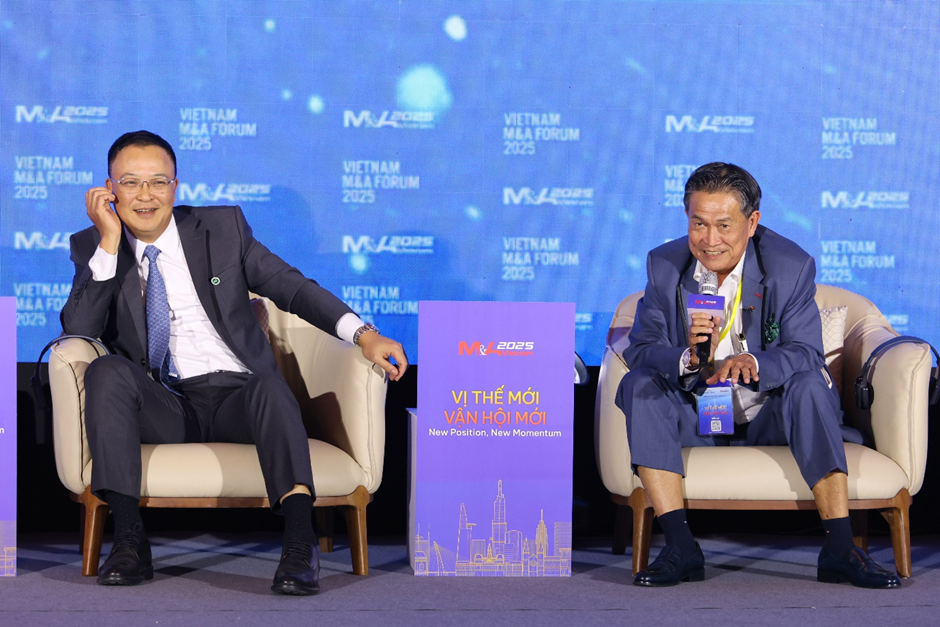
More importantly, reduced legal risk would directly improve the valuation of enterprises and projects. When investors no longer need to “price in risk through heavy discounts,” transaction values are more likely to reflect the true underlying potential of the assets.
Outlook for Vietnam’s M&A market with improved institutions
Mr. Khuong observes that if Vietnam succeeds in enhancing legal consistency, strengthening enforcement efficiency, and improving data transparency, the M&A market could enter a new phase of higher-quality growth.
In such a scenario, not only would transaction volumes increase, but deal structures would also become more sophisticated and substantive, attracting a greater number of strategic investors and long-term capital flows. This would form a critical foundation for M&A to serve as an effective tool for economic restructuring and for elevating Vietnam’s position in the competition for global capital.
At the Vietnam M&A Forum 2025, ASL LAW continues to reaffirm its leading position in the M&A advisory sector by being honored as the Outstanding M&A Advisory Firm Of The Year 2024–2025. Previously, the firm was awarded the title of Outstanding M&A Advisors Of 2009–2023 – a distinction summarizing 15 years of consistent and sustainable professional practice – and recently, Outstanding M&A Advisors Of 2023–2024.
ASL Law is a leading full-service and independent Vietnamese law firm made up of experienced and talented lawyers. ASL Law is ranked as the top tier Law Firm in Vietnam by Legal500, Asia Law, WTR, and Asia Business Law Journal. Based in both Hanoi and Ho Chi Minh City in Vietnam, the firm’s main purpose is to provide the most practical, efficient and lawful advice to its domestic and international clients. If we can be of assistance, please email to [email protected].
ASL LAW is the top tier M&A law firm in Vietnam. If you need any advice, please contact us for further information or collaboration.