Tiếng Việt
 中文 (中国)
 日本語
日本語
In the context of deepening global integration, more Vietnamese enterprises are seeking to expand their operations overseas. However, to legally and effectively carry out oversea investment activities, businesses must strictly comply with all legal procedures regulated by Vietnamese law as well as the laws of the host country. Preparing documents and obtaining investment policy approval…
28
Jun
Jun
Mergers and acquisitions (M&A) are becoming a strategic trend in Vietnam, especially as international capital continues to flow into the market. However, for any M&A transaction to succeed, legal considerations play a vital role, particularly during the stages of due diligence, negotiation, and contract execution. Legal due diligence – the foundation of any M&A transaction…
09
Jul
Jul
In today’s increasingly complex business environment, a contract is not just a transactional agreement—it is a legal shield that protects a company’s interests. However, many Vietnamese businesses still make fundamental contract drafting mistakes, resulting in unnecessary disputes. Below are five common pitfalls to avoid. 1. Failing to clearly define the rights and obligations of the…
04
Jul
Jul
Set up a foreign-invested enterprise in Vietnam is one of the most common ways for foreign investors to enter and develop their presence in the market. However, the legal process for registering an FDI company differs from that of a domestic business and requires investors to fully understand and comply with each step as prescribed by…
03
Jul
Jul
Establishing representative office in Vietnam is an ideal option for many foreign companies seeking to explore the market, promote trade, and establish an initial legal presence without making a full investment like setting up an FDI company. Although not permitted to conduct direct business, a representative office still offers significant legal and commercial advantages. Benefits…

10
Jul
Jul
Establish company in Vietnam is the first step toward legalizing your business operations, expanding your market, and building a professional brand. However, many individuals and businesses still encounter difficulties navigating legal procedures, managing costs, and addressing crucial factors for smooth operations. Procedures for Setting Up a Company in Vietnam To establish a company in Vietnam,…
25
Jun
Jun
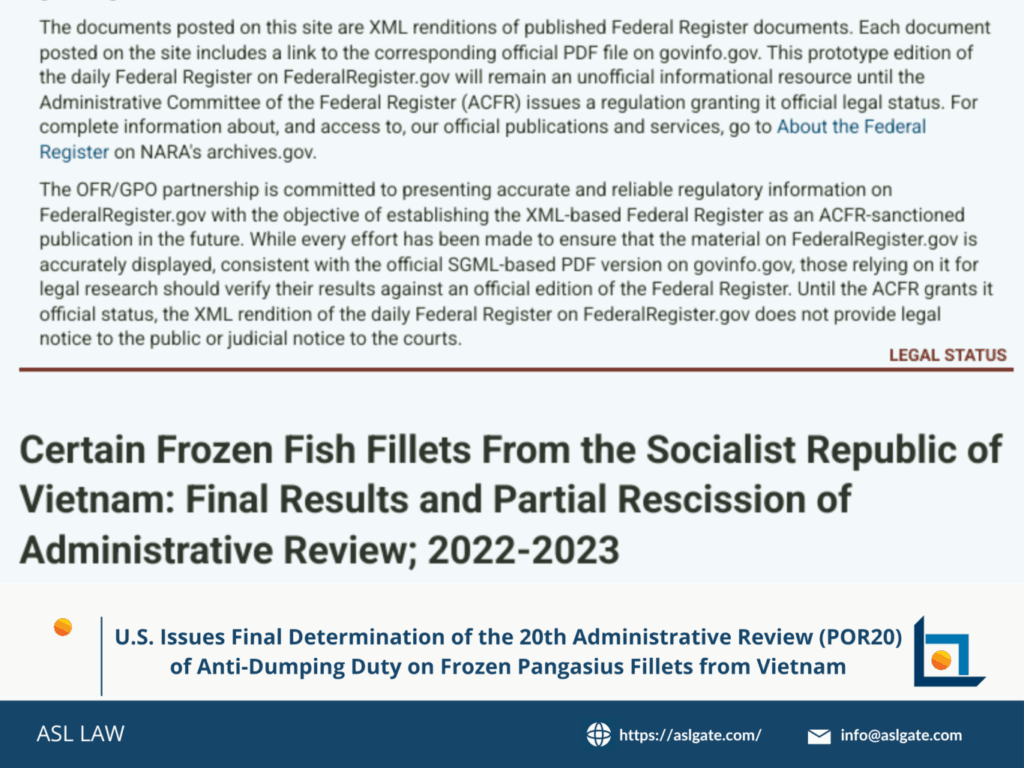
On June 18, 2025, the U.S. Department of Commerce (DOC) officially announced the Final Determination of the 20th administrative review (POR20) of the anti-dumping duty order on frozen pangasius fillets imported from Vietnam, covering the period from August 1, 2022 to July 31, 2023. In this review, eight Vietnamese exporters participated, with two companies selected…

12
Jul
Jul
In an era where innovation is the lifeline of business survival, patent analytics is no longer merely a legal support activity—it has become a strategic tool for shaping and accelerating research and development (R&D) effectively and cost-efficiently. Actual necessity and the importance of patent analytics The growing interest in patent analytics stems from the practical…
21
Jun
Jun
On June 4, 2025, the Trade Remedies Authority of Vietnam (TRAV) organized a public consultation session as part of the ongoing anti-dumping investigation concerning hot-rolled steel products imported from India and China (case code: AD20). The session was held in accordance with Article 70 of the 2017 Law on Foreign Trade Management and Article 13…
20
Jun
Jun
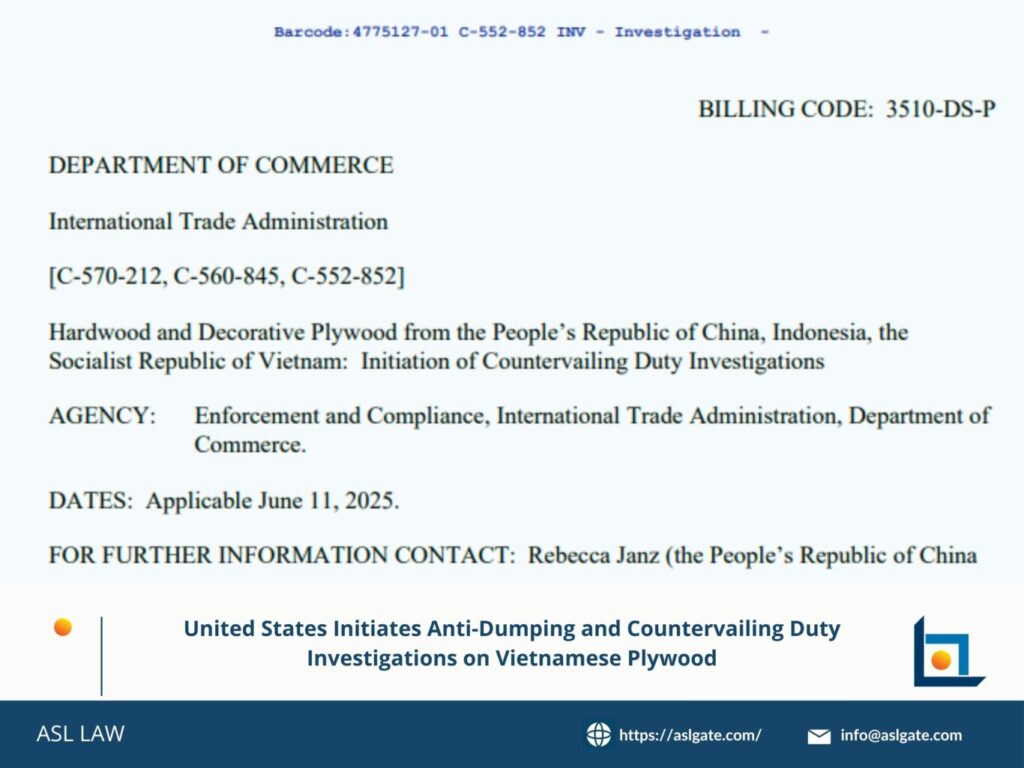
On June 11, 2024, the U.S. Department of Commerce (DOC) officially initiated anti-dumping (AD) and countervailing duty (CVD) investigations on imports of decorative and hardwood plywood from Vietnam. 1. General Information 2. Scope of Investigation 2.1. Anti-Dumping Investigation 2.2. Countervailing Duty Investigation 3. Investigation Process and Timeline 3.1. Roles of U.S. Agencies 3.2. DOC Proceedings…