Tiếng Việt
 中文 (中国)
 日本語
日本語
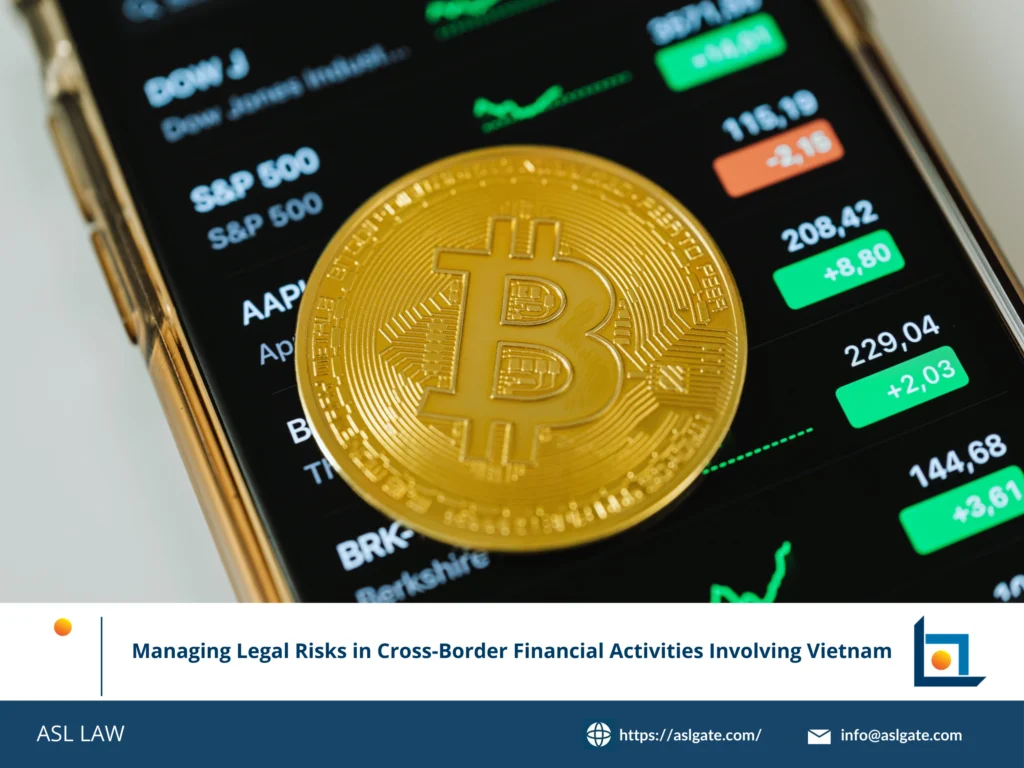
Cross-border financial activities involving Vietnam are expanding rapidly alongside international trade, oversea investment, and digital financial services. As transactions become more complex, managing cross-border financial legal risks Vietnam has become a strategic priority for multinational enterprises, financial institutions, and investors engaging with the Vietnamese market.
Cross-border financial legal risks Vietnam
Cross-border financial legal risks Vietnam commonly arise from differences between domestic regulations and international financial practices. These risks include foreign exchange controls, licensing requirements for cross-border lending, and restrictions on capital flows.
Vietnam maintains a regulated framework for foreign currency transactions, requiring compliance with reporting obligations and approval mechanisms administered by the State Bank of Vietnam. Failure to observe these rules may result in administrative penalties and transaction invalidation.
Managing international finance risks involving Vietnam
Managing international finance risks involving Vietnam requires a clear understanding of sector-specific regulations and transaction structures. Cross-border loans, guarantees, and offshore financing arrangements must comply with both Vietnam law and foreign regulatory regimes.
Practical risk management strategies include early legal structuring, careful choice of governing law, and alignment of contractual terms with Vietnam’s mandatory regulations on interest rates, repayment schedules, and foreign exchange settlement.
Vietnam banking regulations cross-border transactions
Vietnam banking regulations cross-border transactions impose strict requirements on payment channels, intermediary banks, and documentation. Certain cross-border payments must be conducted through licensed credit institutions and supported by valid underlying transactions.
In addition, anti-money laundering and counter-terrorist financing obligations apply to cross-border transactions, increasing compliance burdens for both Vietnamese and foreign counterparties.
Legal compliance for cross-border payments Vietnam
Legal compliance for cross-border payments Vietnam centers on transparency, documentation, and regulatory reporting. Businesses must ensure that payment purposes are lawful, accurately declared, and supported by contracts, invoices, or loan agreements.
Non-compliance may lead to delays, frozen funds, or enhanced scrutiny by banking authorities, affecting transaction efficiency and commercial relationships.
Enterprises conduct business in Vietnam should consider working with full Service law firm in Vietnam to receive detailed consultation to their specific case.
Risk mitigation in Vietnam international finance activities
Risk mitigation in Vietnam international finance activities involves combining legal, financial, and operational controls. Companies are advised to conduct regulatory due diligence, maintain robust internal compliance systems, and seek periodic legal reviews of cross-border financial arrangements.
Integrating dispute resolution mechanisms, such as international arbitration, further strengthens risk management in cross-border financial activities involving Vietnam.
FAQ
1. What are the main legal risks in cross-border financial activities involving Vietnam?
They include foreign exchange controls, licensing requirements, and banking compliance obligations.
2. Do cross-border loans involving Vietnam require regulatory approval?
Yes, certain loans must be registered with or approved by the State Bank of Vietnam.
3. Are all cross-border payments in Vietnam subject to reporting obligations?
Most payments require documentation and may be subject to reporting or verification by banks.
4. How can businesses reduce compliance risks in Vietnam international finance?
By conducting legal due diligence and aligning transactions with Vietnam banking regulations.
5. Why is dispute resolution planning important in cross-border finance?
It provides legal certainty and an effective mechanism to resolve international financial disputes.
Conclusion
Managing legal risks in cross-border financial activities involving Vietnam requires proactive compliance and informed legal structuring. By addressing cross-border financial legal risks Vietnam, strengthening legal compliance for cross-border payments Vietnam, and implementing effective risk mitigation in Vietnam international finance activities, businesses can operate securely and sustainably in the evolving Vietnamese financial landscape.
ASL Law is a leading full-service and independent Vietnamese law firm made up of experienced and talented lawyers. ASL Law is ranked as the top tier Law Firm in Vietnam by Legal500, Asia Law, WTR, and Asia Business Law Journal. Based in both Hanoi and Ho Chi Minh City in Vietnam, the firm’s main purpose is to provide the most practical, efficient and lawful advice to its domestic and international clients. If we can be of assistance, please email to [email protected].
ASL LAW is the top-tier Vietnam law firm for Banking & Financial Services. If you need any advice, please contact us for further information or collaboration.