Tiếng Việt
 中文 (中国)
 日本語
日本語
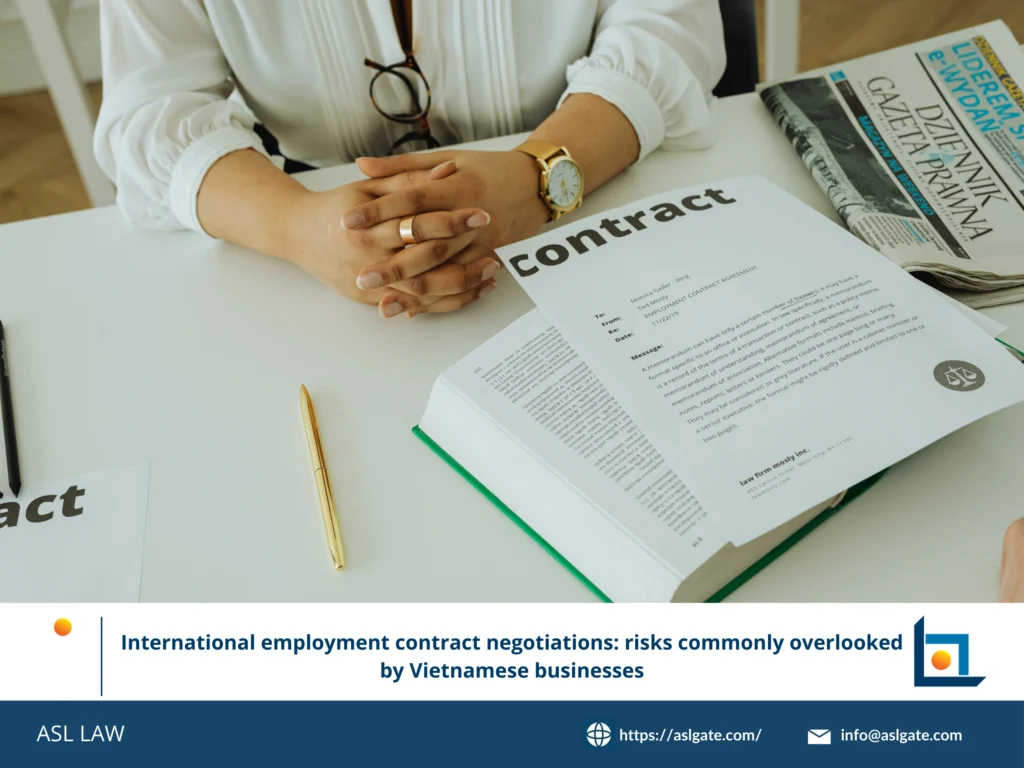
As Vietnamese companies expand overseas and hire foreign talent, international employment contract negotiations have become increasingly complex. Many businesses focus on commercial terms while overlooking legal and regulatory risks that can lead to disputes, compliance failures, and reputational damage.
Legal risks in cross-border employment agreements Vietnam
Legal risks in cross-border employment agreements Vietnam arise from differences in labor laws, mandatory employee protections, and jurisdictional rules. Employment contracts governed by foreign law may still trigger Vietnamese legal obligations, particularly where work is performed or managed from Vietnam.
International employment contract negotiation risks for Vietnamese firms often include misunderstandings about minimum employment standards, termination rights, and social security requirements. Without careful legal analysis, contracts may be unenforceable or expose employers to unexpected liabilities.
Common pitfalls in global hiring contracts for Vietnamese companies
Common pitfalls in global hiring contracts for Vietnamese companies include using standard templates without adapting them to local labor regulations. Clauses on working hours, benefits, and non-compete obligations may conflict with mandatory rules in the host country.
Vietnamese businesses negotiating international work contracts also frequently overlook language discrepancies and inconsistencies between contract versions. These issues can complicate dispute resolution and weaken the employer’s legal position.
For foreign investors and legal professionals, these pitfalls highlight the need for jurisdiction-specific drafting.
Enterprises conduct business in Vietnam should consider working with full Service law firm in Vietnam to receive detailed consultation to their specific case.
Vietnamese businesses negotiating international work contracts
Vietnamese businesses negotiating international work contracts must address governing law and dispute resolution carefully. Selecting inappropriate jurisdictions or arbitration venues can increase enforcement costs and procedural uncertainty.
Mitigating risks in overseas employment contracts from Vietnam requires clarity on tax obligations, immigration compliance, and permanent establishment risks. Employment arrangements may unintentionally create taxable presence or regulatory exposure in foreign jurisdictions.
Strategic planning at the negotiation stage reduces long-term compliance burdens.
Mitigating risks in overseas employment contracts from Vietnam
Mitigating risks in overseas employment contracts from Vietnam involves proactive legal structuring and ongoing compliance management. Companies should conduct legal due diligence on host country labor laws and coordinate with local advisors.
International employment contract negotiation risks for Vietnamese firms can be reduced by clearly defining job scope, reporting lines, and applicable policies. Regular contract reviews ensure alignment with evolving labor regulations and business needs.
For tech entrepreneurs and expanding enterprises, structured risk mitigation supports sustainable workforce growth.
Managing disputes and long-term employment risks
Legal risks in cross-border employment agreements Vietnam extend beyond contract execution to dispute resolution and termination. Poorly drafted termination clauses may lead to wrongful dismissal claims or compensation obligations.
Common pitfalls in global hiring contracts for Vietnamese companies can also affect post-employment restrictions and confidentiality enforcement. Clear contract drafting and enforceable remedies protect business interests while respecting employee rights.
Effective risk management enhances employer credibility and workforce stability.
Frequently asked questions
1. What are the main risks in international employment contract negotiations?
International employment contract negotiation risks for Vietnamese firms include non-compliance with foreign labor laws and unenforceable contract terms.
2. Can Vietnamese law apply to overseas employment contracts?
Legal risks in cross-border employment agreements Vietnam may arise where work or management is linked to Vietnam.
3. Why are standard employment templates risky for global hiring?
Common pitfalls in global hiring contracts for Vietnamese companies include conflicts with mandatory local labor rules.
4. How can businesses reduce risks in overseas employment contracts?
Mitigating risks in overseas employment contracts from Vietnam requires jurisdiction-specific contract drafting and legal due diligence.
5. Should companies seek local legal advice when hiring abroad?
Yes, Vietnamese businesses negotiating international work contracts benefit from coordinated local and international legal support.
Conclusion
International employment contract negotiations: risks commonly overlooked by Vietnamese businesses underscore the importance of legal foresight in global expansion. By understanding international employment contract negotiation risks for Vietnamese firms and applying structured approaches to mitigating risks in overseas employment contracts from Vietnam, businesses can strengthen compliance, reduce disputes, and build sustainable international workforce strategies.
ASL Law is a leading full-service and independent Vietnamese law firm made up of experienced and talented lawyers. ASL Law is ranked as the top tier Law Firm in Vietnam by Legal500, Asia Law, WTR, and Asia Business Law Journal. Based in both Hanoi and Ho Chi Minh City in Vietnam, the firm’s main purpose is to provide the most practical, efficient and lawful advice to its domestic and international clients. If we can be of assistance, please email to [email protected].
ASL LAW is the top-tier Vietnam law firm for Employment and Labor Law. If you need any advice, please contact us for further information or collaboration.