Tiếng Việt
 中文 (中国)
 日本語
日本語
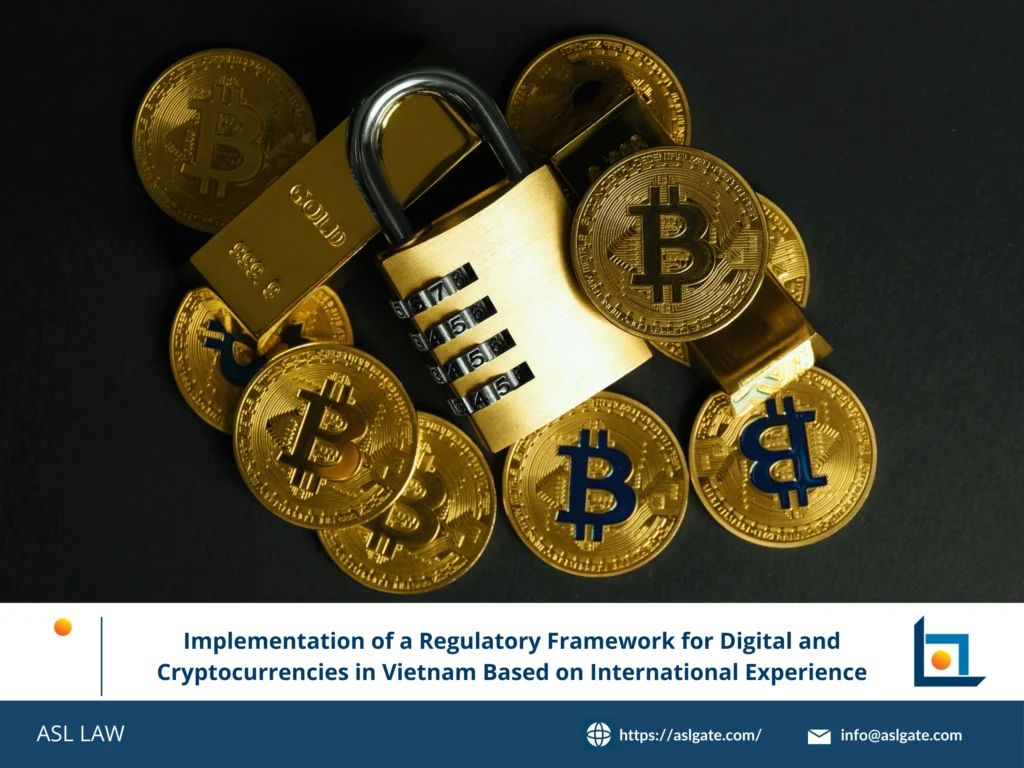
In the context of rapid global digital transformation, digital currencies and cryptocurrencies have become an integral component of the digital economy. The development of blockchain technology has not only transformed the methods of storing, verifying, and transferring value, but has also created new forms of assets beyond the traditional financial and monetary system.
Cryptocurrencies, characterized by decentralization, cross-border operability, and cryptographic foundations, are increasingly influencing investment, payment, and capital mobilization activities in international markets.
The rapid proliferation of digital currencies and cryptocurrencies simultaneously poses significant challenges to state management. On the one hand, these assets entail substantial risks relating to price volatility, fraud, scams, money laundering, and the financing of unlawful activities.
On the other hand, if properly regulated, cryptocurrencies and blockchain technology may promote innovation, enhance the efficiency of the financial system, and attract foreign investment flows into Vietnam. The coexistence of opportunities and risks compels countries to adopt a cautious yet proactive approach rather than remain outside this global trend.
For Vietnam, the need to implement a regulatory system for digital and cryptocurrencies has become particularly urgent in the context of deep international integration and the established orientation toward developing a digital economy. In practice, although a comprehensive legal framework has not yet been introduced, the cryptocurrency market in Vietnam continues to expand rapidly, with the participation of numerous individuals and organizations.
The prolonged gap between market realities and existing legal provisions may increase risks for investors, create difficulties for regulatory authorities, and cause missed opportunities to harness the potential of new business models. Therefore, studying and applying international experience to gradually implement an appropriate regulatory model is an inevitable requirement in order to balance risk control with development promotion.
International Experience in Regulating Digital and Cryptocurrency Systems
International practice demonstrates that there is no single regulatory model applicable to all countries. Each jurisdiction’s approach depends on the level of financial market development, regulatory capacity, and macroeconomic policy orientation. Nevertheless, current regulatory models may be broadly categorized into several typical groups, from which valuable lessons may be drawn for Vietnam.
First, the controlled legalization model has been adopted by many developed countries. Under this model, cryptocurrencies are not necessarily recognized as legal tender but are acknowledged as a type of asset or a specific subject of regulation within the legal system. The United States applies a decentralized approach, involving multiple regulatory agencies, with a focus on supervising exchanges, protecting investors, and ensuring compliance with anti-money laundering regulations.
Japan has chosen to recognize cryptocurrencies as lawful assets, accompanied by a licensing and strict supervisory regime for exchanges. Singapore stands out for its flexible approach, establishing a clear legal framework through the Payment Services Act, ensuring financial system safety while encouraging innovation.
Second, the restrictive or outright prohibition model has been adopted by certain countries to control financial risks and capital flows. China is a typical example, having imposed bans on cryptocurrency mining and trading while focusing on the development of a central bank digital currency. However, practical experience indicates that absolute prohibition is unlikely to eliminate cryptocurrency-related activities entirely; rather, such activities may shift to informal channels or offshore platforms, making supervision more difficult.
Third, the absence of a comprehensive legal framework is common in some developing countries, where cryptocurrency development has outpaced the responsiveness of the legal system. The lack of clear regulations results in a spontaneously operating market with considerable risks for investors and reduced effectiveness of state management. Experience from this group of countries shows that delays in establishing a legal framework may place the State in a reactive position once the market scale exceeds regulatory capacity.
From these models, several important lessons can be drawn. An outright ban is not a sustainable solution, while uncontrolled legalization carries substantial risks. The prevailing global trend is to implement a risk-based regulatory model, combining conditional legal recognition, effective supervisory mechanisms, and investor protection measures. This provides an essential reference point for Vietnam in developing and implementing a suitable regulatory framework for digital and cryptocurrencies.
Enterprises doing business in Vietnam should consider contacting a Law Firm Located in Ho Chi Minh City capable of providing Vietnam Company Secretarial Services and Corporate services in Vietnam tailor-based to the enterprises’ specific needs.
Current Status of Digital and Cryptocurrency Regulation in Vietnam
At present, Vietnam’s legal system has not established a unified and comprehensive framework governing digital currencies, cryptocurrencies, and related activities. The prevailing regulatory stance of the State is reflected in the non-recognition of cryptocurrencies as lawful means of payment.
Under current regulations of the State Bank of Vietnam, any issuance, supply, or use of cryptocurrencies as a means of payment is prohibited. This approach reflects regulatory caution in light of potential risks to monetary policy and financial system stability.
However, from a market perspective, cryptocurrencies in Vietnam continue to develop rapidly despite the absence of a clear legal corridor. The number of individual investors engaging in cryptocurrency trading has increased steadily, and buying, investment, and holding activities are commonly conducted through cross-border platforms.
This situation reveals a significant gap between legal provisions and actual market demand. When economic activities are conducted outside the scope of legal regulation, the State faces difficulties in management and is less able to protect the lawful rights and interests of participating entities.
In addition, the lack of specific regulations on transactions, exchange management, tax obligations, and supervisory mechanisms has heightened potential risks. Fraudulent schemes, scams, and asset misappropriation under the guise of cryptocurrency investment have become increasingly sophisticated, while the legal basis for enforcement remains fragmented and incomplete.
At the same time, the risk of cryptocurrencies being used for unlawful financial activities presents further challenges for state management. Maintaining a state of regulatory ambiguity is no longer appropriate given the considerable scale of the market.
Businesses operating in Vietnam should consider consulting leading law firms in Vietnam to obtain legal advice tailored to their specific business circumstances.
Orientation for Implementing a Regulatory Framework for Digital and Cryptocurrencies in Vietnam Based on International Experience
Based on international experience and domestic realities, the implementation of a regulatory framework for digital and cryptocurrencies in Vietnam should be guided by the principle of balancing risk control with development encouragement. It is essential to avoid the two extremes of absolute prohibition or uncontrolled legalization. Instead, the regulatory model should adopt a risk-based approach, clearly defining the scope and extent of state intervention for each type of cryptocurrency-related activity.
A key orientation is to complete the legal foundation for digital assets within the civil law system. Recognizing cryptocurrencies as a form of asset, rather than as currency, would provide a legal basis for regulating civil relations arising from transactions, investment, and transfer of such assets. International experience demonstrates that clear classification of digital asset types enables regulators to design flexible policies aligned with the characteristics and risk levels of each category.
Simultaneously, financial and banking laws should be adjusted to clarify the legal status of cryptocurrencies in relation to the national monetary system. Vietnam may continue not to recognize cryptocurrencies as legal tender, while considering permitting their use in certain activities as investment assets or conditionally accepted alternative payment instruments. Such an approach would preserve the State’s authority over monetary policy while preventing cryptocurrency-related activities from moving beyond regulatory oversight.
Moreover, the establishment of supervisory and management mechanisms is crucial to the effective implementation of a cryptocurrency regulatory system. Trading and service provision activities should be subject to anti-money laundering regulations and corresponding risk management standards. In parallel, a clear tax policy on income derived from cryptocurrencies should be established to ensure fairness and transparency in fulfilling financial obligations.
Finally, the protection of consumers and foreign investors in Vietnam should be regarded as a pillar of the regulatory orientation. Requirements on information transparency, segregation of client and company assets, and licensing conditions for cryptocurrency service providers will contribute to building market confidence. On that basis, Vietnam may gradually implement an appropriate regulatory model for digital and cryptocurrencies, drawing upon international experience while adapting flexibly to domestic socio-economic conditions and regulatory capacity.
ASL Law is a leading full-service and independent Vietnamese law firm made up of experienced and talented lawyers. ASL Law is ranked as the top tier Law Firm in Vietnam by Legal500, Asia Law, WTR, and Asia Business Law Journal. Based in both Hanoi and Ho Chi Minh City in Vietnam, the firm’s main purpose is to provide the most practical, efficient and lawful advice to its domestic and international clients. If we can be of assistance, please email to [email protected].
ASL LAW is the top-tier Vietnam law firm for Banking & Financial Services. If you need any advice, please contact us for further information or collaboration.