Tiếng Việt
 中文 (中国)
 日本語
日本語
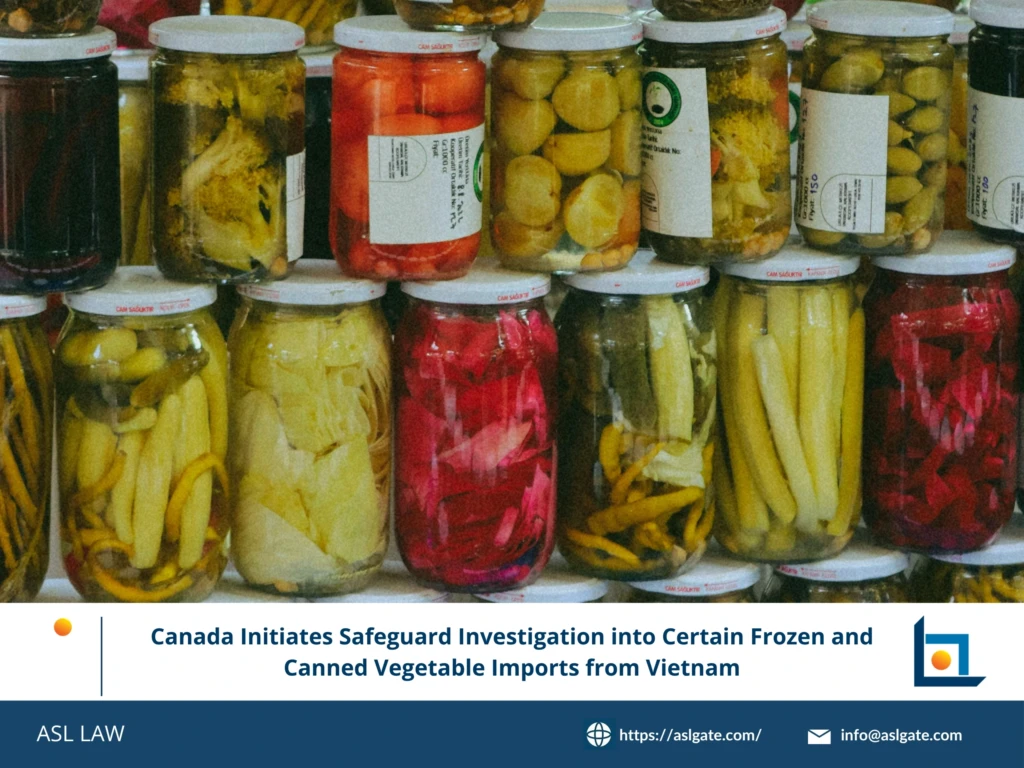
On March 16, 2026, the Trade Remedies Authority of Vietnam (TRAV) under the Ministry of Industry and Trade announced that it had received information from the Vietnam Trade Office in Canada regarding the initiation of a safeguard investigation by the Canada International Trade Tribunal (CITT) into certain frozen and canned vegetable products imported from Vietnam. The case is considered likely to directly affect the export activities of Vietnamese processed vegetable enterprises to the Canadian market in the coming period.
1. General Information
According to the notice of initiation, the products under investigation include certain frozen or canned vegetables such as corn, peas, green beans, yellow beans, mixed beans and carrots, mixed vegetables, and several types of beans including white beans, black beans, red beans, pinto beans, and chickpeas.
Some products are excluded from the scope of the investigation, including fresh or dried vegetables; prepared meals in which vegetables are not the main ingredient; and highly processed vegetable products such as purée, powder, juice, paste, or similar processed forms.
The HS codes identified within the scope of the investigation include: 0710.21; 0710.22; 0710.40; 0710.80; 0710.90; 2005.40; 2005.51; 2005.59; 2005.80; 2005.99.
In the initiation notice, CITT stated that it will examine the increase in imports and the impact on the domestic production industry in Canada. If the investigating authority concludes that the surge in imports has caused or threatens to cause serious injury to the domestic industry, Canada may apply safeguard measures for a period of three years, which may be extended up to a maximum of eight years in accordance with applicable regulations.
2. Expected Investigation Timeline
The investigation will be conducted in accordance with Canada’s safeguard investigation procedures, under which CITT will collect information from relevant parties, assess the level of import increase, evaluate the injury to the domestic industry, and determine the causal link between these factors. Exporting enterprises and relevant authorities may be required to provide data, respond to questionnaires, and participate in hearings if necessary.
The preliminary and final investigation results will serve as the basis for Canada to determine whether safeguard measures will be imposed, as well as the scope, level, and duration of such measures.
3. Recommendations for Vietnamese Enterprises
To effectively respond to the case, TRAV recommends that Vietnamese producers and exporters of frozen and canned vegetables to Canada closely monitor developments of the investigation, study Canada’s safeguard regulations and procedures, and review their export situation, production volume, market share, and relevant data.
Enterprises should also maintain regular communication with the Trade Remedies Authority of Vietnam to receive timely updates, guidance, and support throughout the case handling process, particularly in preparing documentation, providing data, and participating in investigation procedures as required by Canadian authorities.
To protect their legitimate interests, manufacturers and exporters should familiarize themselves with the procedure and actively contact Vietnam Antidumping Law Firm specializing in anti-dumping and trade remedy for timely assistance.
ASL Law is a leading full-service and independent Vietnamese law firm made up of experienced and talented lawyers. ASL Law is ranked as the top tier Law Firm in Vietnam by Legal500, Asia Law, WTR, and Asia Business Law Journal. Based in both Hanoi and Ho Chi Minh City in Vietnam, the firm’s main purpose is to provide the most practical, efficient and lawful advice to its domestic and international clients. If we can be of assistance, please email to [email protected].
ASL LAW is the top-tier Vietnam law firm for Anti-dumping & countervailing. If you need any advice, please contact us for further information or collaboration.