Tiếng Việt
 中文 (中国)
 日本語
日本語
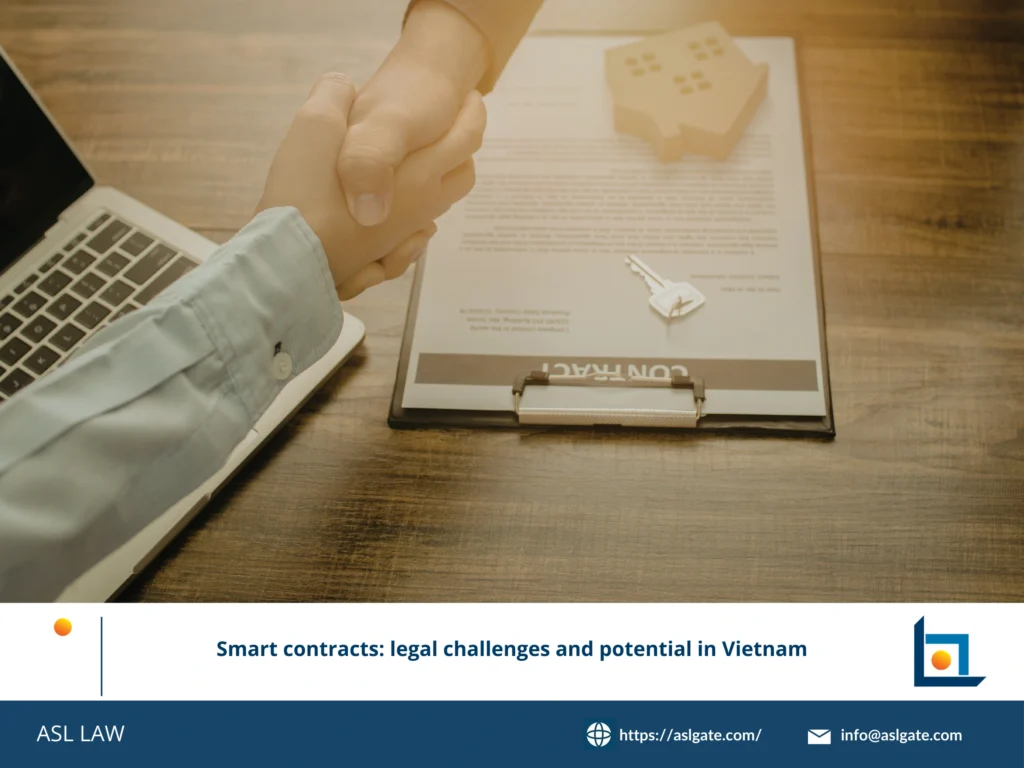
Smart contracts are rapidly emerging as a transformative tool in Vietnam’s digital economy, enabling automated execution of agreements through blockchain technology. While they promise efficiency, transparency, and reduced disputes, they also face significant legal and regulatory challenges that businesses must navigate carefully.
Smart contract legal challenges Vietnam blockchain technology
Smart contract legal challenges Vietnam blockchain technology primarily stem from uncertainty in legal recognition, enforceability, and jurisdiction. Vietnamese law does not yet fully define the legal status of smart contracts, making it unclear whether disputes can be resolved in court under traditional contract law.
Blockchain contract implementation challenges Vietnam also include technical issues such as coding errors, security vulnerabilities, and interoperability between platforms. These factors can affect execution and create liability risks for parties relying solely on automated processes.
Enterprises doing business in Vietnam should consider contacting a Vietnam business law firm for legal advice on Corporate services in Vietnam tailored-based to the enterprise’s specific circumstances.
Legal recognition of smart contracts in Vietnam
Legal recognition of smart contracts in Vietnam is evolving. While electronic transactions are supported under the Law on Electronic Transactions, the explicit enforceability of blockchain-based self-executing contracts remains uncertain. Businesses using smart contracts must ensure that agreements meet general contract requirements, including consent, legality, and clarity of obligations.
Smart contract potential Vietnam digital economy is significant, as these agreements can reduce administrative burdens, enhance trust, and streamline cross-border transactions. However, the lack of explicit legal recognition may limit adoption for critical business arrangements.
Blockchain contract implementation challenges Vietnam
Blockchain contract implementation challenges Vietnam include ensuring compliance with data protection, consumer protection, and anti-money laundering regulations. Misalignment between the automated execution of a smart contract and Vietnamese regulatory requirements may expose parties to legal risks.
Smart contracts must also integrate safeguards for error correction, dispute resolution, and termination conditions. Without such mechanisms, technical failures can escalate into legal disputes.
Smart contract potential Vietnam digital economy
Smart contract potential Vietnam digital economy is vast, particularly for sectors like finance, supply chain, real estate, and e-commerce. Automated contract enforcement reduces transaction costs, accelerates execution, and improves transparency between counterparties.
Regulatory framework for smart contracts in Vietnam is expected to evolve as authorities explore formal recognition, legal guidelines, and compliance standards. Businesses that adopt smart contracts early while managing legal uncertainties gain a competitive advantage in the digital economy.
Regulatory framework for smart contracts in Vietnam
The regulatory framework for smart contracts in Vietnam remains under development. Enterprises must monitor emerging regulations from the Ministry of Justice, Ministry of Finance, and relevant authorities, ensuring that blockchain-based agreements comply with electronic transaction laws, civil codes, and sector-specific rules.
Smart contract legal challenges Vietnam blockchain technology can be mitigated by combining automated execution with traditional contract clauses, professional legal review, and robust documentation. This hybrid approach enhances enforceability and risk management.
Frequently asked questions
1. What are the main legal challenges of smart contracts in Vietnam?
Smart contract legal challenges Vietnam blockchain technology include uncertain enforceability, jurisdictional ambiguity, and compliance with existing contract laws.
2. Are smart contracts legally recognized in Vietnam?
Legal recognition of smart contracts in Vietnam is limited; electronic transactions are supported, but blockchain-based self-executing contracts lack explicit legal status.
3. What are the main implementation challenges?
Blockchain contract implementation challenges Vietnam include coding errors, security vulnerabilities, and regulatory compliance issues.
4. What potential do smart contracts have in Vietnam?
Smart contract potential Vietnam digital economy includes automated execution, reduced transaction costs, and enhanced transparency in finance, supply chain, and e-commerce.
5. How can legal risks be mitigated?
Regulatory framework for smart contracts in Vietnam can be addressed by combining automated contracts with traditional clauses, legal review, and robust documentation.
Conclusion
Smart contracts: legal challenges and potential in Vietnam illustrate both the opportunities and uncertainties of blockchain-based agreements. By understanding smart contract legal challenges Vietnam blockchain technology, monitoring legal recognition of smart contracts in Vietnam, addressing blockchain contract implementation challenges Vietnam, and leveraging smart contract potential Vietnam digital economy within an emerging regulatory framework for smart contracts in Vietnam, businesses can adopt innovative solutions while mitigating legal risks and positioning themselves for growth in Vietnam’s digital economy.
ASL Law is a leading full-service and independent Vietnamese law firm made up of experienced and talented lawyers. ASL Law is ranked as the top tier Law Firm in Vietnam by Legal500, Asia Law, WTR, and Asia Business Law Journal. Based in both Hanoi and Ho Chi Minh City in Vietnam, the firm’s main purpose is to provide the most practical, efficient and lawful advice to its domestic and international clients. If we can be of assistance, please email to [email protected].
ASL LAW is the top-tier Vietnam law firm for Contract Reviewing and Drafting. If you need any advice, please contact us for further information or collaboration.