Tiếng Việt
 中文 (中国)
 日本語
日本語
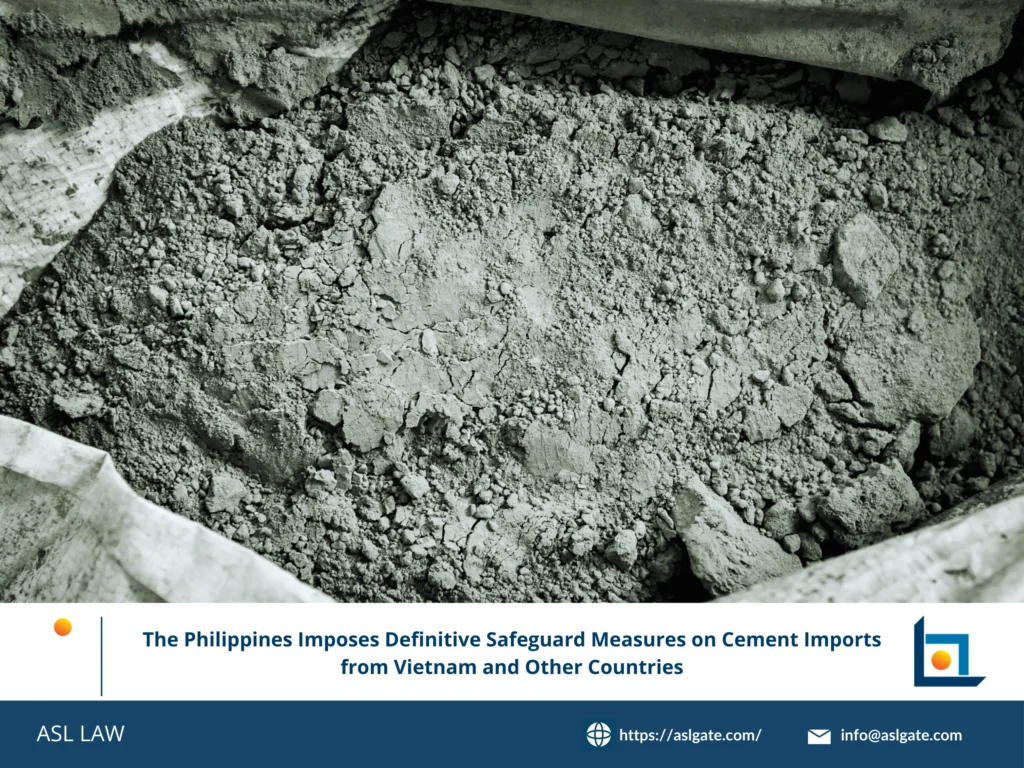
According to information from the Permanent Mission of Vietnam in Geneva, the Government of the Philippines, through the Department of Trade and Industry (DTI), has notified the WTO Committee on Safeguards of its decision to impose definitive safeguard measures on imported cement products, including Ordinary Portland Cement (OPC) and Blended Cement, originating from multiple countries.
With respect to the basis for the application of the safeguard measure, the Philippines stated that the measure was adopted following a determination that imports of cement, including OPC Type 1 and blended cement, had surged sharply since 2023, causing serious injury or posing a threat of serious injury to the domestic cement industry during the investigation period of 2023–2024.
Although domestic cement demand has remained generally stable, the significant increase in imports has substantially undermined the recovery and improvement of production and business performance of the Philippine cement industry.
According to the notification, serious injury to the domestic cement industry is reflected through several key indicators.
First, the market share of imported cement increased rapidly. During the period of import surge, the category of “imports not subject to trade remedy measures” accounted for only approximately 5% of market share in 2022, but rose to 24% in 2023 and further to around 28% in 2024. In the context of stable market demand, this increase directly reduced the domestic industry’s market share to its lowest level, at approximately 72% in 2024.
Second, domestic production and sales volumes declined markedly due to the sharp increase in cement imports in 2023 and 2024, causing these indicators to fall to their lowest levels during the investigation period.
Third, the Philippine cement industry faced excess capacity and financial pressure, as capacity expansion investments had been made since 2020 in anticipation of demand growth, while actual demand did not increase correspondingly and imports surged significantly, resulting in imported products directly substituting domestic products.
Regarding the content of the definitive safeguard measure, the Philippines decided to apply the measure in the form of an increase in a specific duty on imported cement. Specifically, the definitive safeguard duty is set at PHP 14.00 per 40 kg bag, equivalent to PHP 349.00 per metric ton, for the first year of application.
This duty will be subject to periodic review, and the DTI may adjust it as necessary in line with market developments and the condition of the domestic industry. The safeguard measure will take effect from the date on which the Philippine Bureau of Customs issues a Customs Order or Circular to implement the measure. The decision to impose the measure was signed by the Secretary of DTI and published in two major newspapers in the Philippines on 21 October 2025.
The duration of the definitive safeguard measure is three years, expected to apply from 2025 to 2028, accompanied by a liberalization schedule through periodic reviews to ensure consistency with WTO rules and actual conditions.
According to the Philippine notification, WTO Members that are major exporters of cement covered by the investigation include China, Indonesia, Japan, and Vietnam. At the same time, the Philippines also announced a list of developing countries excluded from the application of the safeguard measure pursuant to Article 9.1 of the Agreement on Safeguards, together with their corresponding import shares, based on WTO criteria and regulations.
On this basis, the Trade Remedies Authority of Vietnam recommends that Vietnamese cement producers and exporters closely monitor the implementation and enforcement of the Philippine safeguard measure, proactively review contracts and export plans to this market during the 2025–2028 period in order to make appropriate adjustments, and closely coordinate with the Trade Remedies Authority of Vietnam in information exchange and the formulation of response options when necessary. The Trade Remedies Authority of Vietnam will continue to monitor developments in the case and promptly update relevant associations and enterprises.
To protect their legitimate interests, manufacturers and exporters should familiarize themselves with the procedure and actively contact Vietnam Antidumping Law Firm specializing in anti-dumping and trade remedy for timely assistance.
ASL Law is a leading full-service and independent Vietnamese law firm made up of experienced and talented lawyers. ASL Law is ranked as the top tier Law Firm in Vietnam by Legal500, Asia Law, WTR, and Asia Business Law Journal. Based in both Hanoi and Ho Chi Minh City in Vietnam, the firm’s main purpose is to provide the most practical, efficient and lawful advice to its domestic and international clients. If we can be of assistance, please email to [email protected].
ASL LAW is the top-tier Vietnam law firm for Anti-dumping & countervailing. If you need any advice, please contact us for further information or collaboration.