Tiếng Việt
 中文 (中国)
 日本語
日本語
In many M&A transactions in Vietnam, prolonged deal timelines or valuations falling short of expectations are often not caused by a lack of investor interest, but rather by insufficient readiness on the seller’s side. For professional investors—particularly foreign investors—acquisition decisions are based not only on business potential, but largely on the target company’s level of legal, governance, and data preparedness.
As a result, being “ready before going to market” has increasingly become a decisive factor for Vietnamese enterprises seeking to improve deal execution capability and achieve optimal valuations.
The role of early preparation before bringing assets to market
Early preparation enables enterprises to proactively control the M&A process, instead of being placed in a defensive position once investors begin due diligence. When legal, financial, and operational records have not been thoroughly reviewed, negotiations tend to generate repeated requests for clarification and supplementation, prolonging transactions and weakening the seller’s position.

Conversely, a well-prepared enterprise is more likely to build investor confidence, reduce concerns over hidden risks, and strengthen its leverage in negotiating price and key deal terms.
Strategy for identifying target investors
Not all investors share the same objectives, risk appetite, or due diligence standards. Vietnamese enterprises need to clearly determine whether they are targeting domestic or foreign investors, strategic investors, or financial offshore investment funds.
In market practice, strategic investors typically focus on control, long-term alignment, and integration potential, while private equity funds emphasize transaction structure, exit strategies, and governance standards. Correctly identifying the target investor group allows enterprises to prepare appropriate documentation, data, and messaging, thereby avoiding wasted time and resources.
Internal legal due diligence: why it is particularly critical
Internal legal due diligence is the process by which an enterprise proactively reviews its own legal documentation and project records before engaging with investors. This exercise helps identify early-stage issues relating to land use, licenses, contracts, financial obligations, or potential disputes.

Without this step, legal issues often surface only during the buyer’s due diligence process, placing the seller in a reactive position—forced to provide urgent explanations or accept significant valuation discounts. Internal legal DD allows enterprises to resolve issues in advance or, at a minimum, prepare clear and credible explanations for investors.
Standardizing the project data set
A complete, coherent, and easily accessible data set forms the backbone of an efficient due diligence process. Legal, financial, technical, and operational documents should be systematically organized and accurately reflect the actual status of the enterprise and its projects.
Data standardization not only shortens due diligence timelines, but also minimizes misunderstandings and reduces repeated information requests from investors and advisors. In large transactions, professional data management further demonstrates the seller’s governance capability.
Observations from Mr. Pham Duy Khuong on common seller-side mistakes
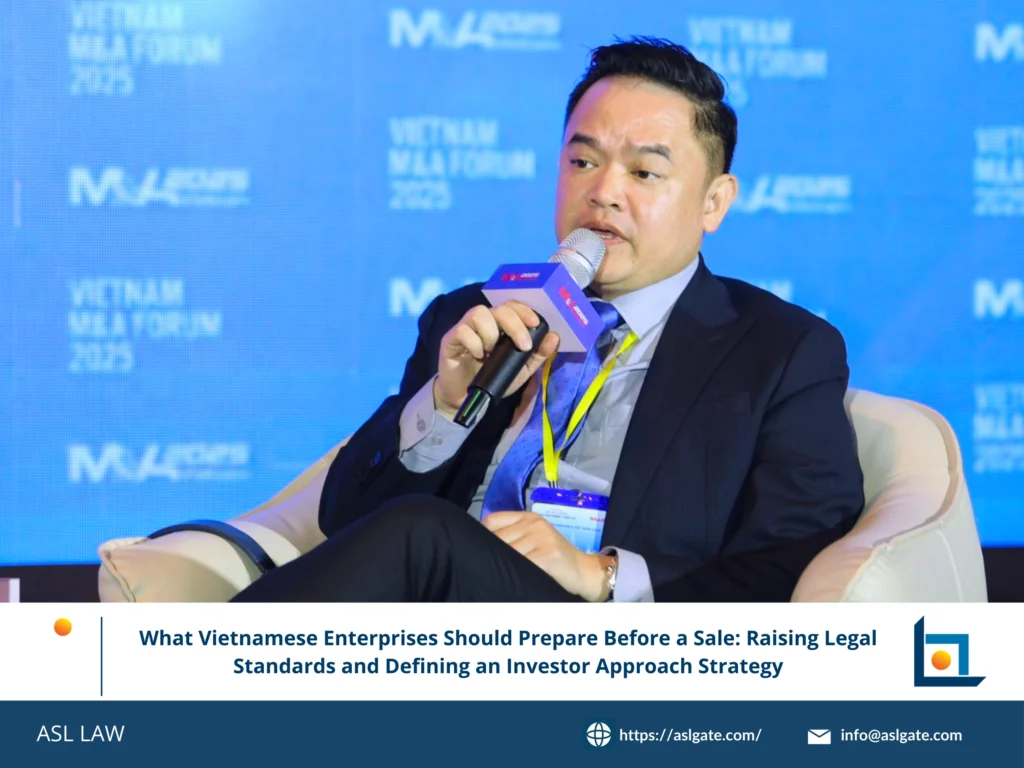
According to Mr. Pham Duy Khuong, Managing Partner of ASL LAW, a common mistake among many Vietnamese enterprises is waiting until investors have already approached them before beginning preparations. At that point, enterprises must juggle daily business operations while simultaneously responding to due diligence requests, often resulting in overload and inconsistent information disclosure.

Mr. Khuong also notes that many sellers fail to clearly define their target investor profile, leading to scattered outreach efforts, unfocused documentation, and reduced attractiveness in the eyes of professional investors. This lack of preparation ultimately manifests in lower valuations and less favorable transaction terms.
Conclusion: thorough preparation to accelerate deal execution
In an increasingly competitive and selective M&A environment, systematic preparation is no longer an advantage—it has become a prerequisite. Vietnamese enterprises seeking successful exits and higher valuations must invest time and resources in upgrading legal readiness, standardizing data, and developing a well-defined investor outreach strategy.
When enterprises demonstrate readiness and professionalism, negotiations tend to proceed more efficiently, transaction costs are reduced, and the likelihood of successfully closing deals increases significantly.
At the Vietnam M&A Forum 2025, ASL LAW continues to reaffirm its leading position in the M&A advisory sector by being honored as the Outstanding M&A Advisory Firm Of The Year 2024–2025. Previously, the firm was awarded the title of Outstanding M&A Advisors Of 2009–2023 – a distinction summarizing 15 years of consistent and sustainable professional practice – and recently, Outstanding M&A Advisors Of 2023–2024.
ASL Law is a leading full-service and independent Vietnamese law firm made up of experienced and talented lawyers. ASL Law is ranked as the top tier Law Firm in Vietnam by Legal500, Asia Law, WTR, and Asia Business Law Journal. Based in both Hanoi and Ho Chi Minh City in Vietnam, the firm’s main purpose is to provide the most practical, efficient and lawful advice to its domestic and international clients. If we can be of assistance, please email to [email protected].
ASL LAW is the top tier M&A law firm in Vietnam. If you need any advice, please contact us for further information or collaboration.