Tiếng Việt
 中文 (中国)
 日本語
日本語
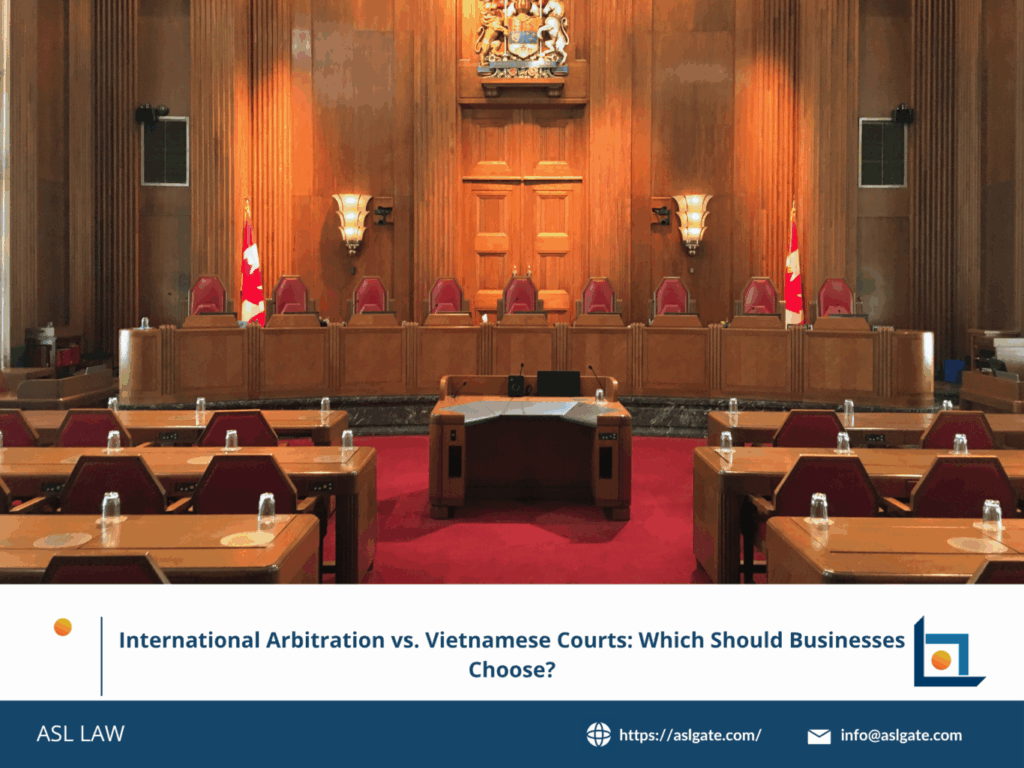
In an increasingly globalized business environment, the ability to resolve cross-border disputes efficiently is crucial. For enterprises doing business in Vietnam or with Vietnamese partners, two main avenues exist for dispute resolution: international arbitration and the Vietnamese court system. Each offers distinct advantages and limitations. Understanding when and how to use each option can significantly affect the outcome, cost, and enforceability of a dispute resolution process.
Understanding the Legal Framework
Vietnam recognizes both domestic litigation and international arbitration as legitimate mechanisms for resolving commercial disputes. Arbitration in Vietnam is governed by the Law on Commercial Arbitration (2010), which aligns with international norms, particularly the UNCITRAL Model Law. Additionally, Vietnam is a party to the New York Convention on the Recognition and Enforcement of Foreign Arbitral Awards, facilitating enforcement across borders.
Benefits of International Arbitration
International arbitration offers several advantages:
- Neutrality: Especially valuable in cross-border contracts, arbitration allows parties to avoid potential bias from local courts.
- Confidentiality: Arbitral proceedings are private, which protects sensitive business information.
- Expertise: Arbitrators are often specialists in commercial law or the specific industry in question.
- Global enforcement: Thanks to the New York Convention, arbitral awards are easier to enforce internationally than court judgments.
Challenges with Arbitration
Despite its benefits, arbitration has limitations:
- Cost: Arbitration can be expensive, particularly with international arbitral institutions and foreign counsel.
- Limited appeal: Arbitral awards are typically final and binding, which may be a disadvantage if an error occurs.
- Enforcement in Vietnam: Although Vietnam is a party to the New York Convention, local courts may still refuse to enforce foreign awards under certain conditions.
When to Use Vietnamese Courts
Vietnamese courts are the default mechanism for resolving disputes within Vietnam, especially when:
- The dispute involves purely domestic issues.
- One or more parties prefer litigation in a known legal system.
- Cost is a major concern, as court proceedings are generally less expensive than arbitration.
However, Vietnamese court proceedings can be time-consuming and less predictable for foreign parties due to potential language barriers, procedural rigidity, or lack of specialized expertise.
Choosing the Right Forum
The decision should be made during contract drafting. Parties should include a well-drafted dispute resolution clause specifying:
- Choice of arbitration or court
- Seat and rules of arbitration
- Language of proceedings
- Enforcement considerations
Multi-tier dispute resolution clauses, such as negotiation followed by arbitration, are also common and enforceable under Vietnamese law.
Legal Foresight Equals Project Success
Choosing between international arbitration and domestic courts requires a careful balance of legal strategy, cost control, and enforceability concerns. By analyzing the nature of the contract, the parties involved, and the jurisdictions likely to be relevant, enterprises doing business in Vietnam can make a forward-looking decision that protects their long-term interests.
ASL Law is a leading full-service and independent Vietnamese law firm made up of experienced and talented lawyers. ASL Law is ranked as the top tier Law Firm in Vietnam by Legal500, Asia Law, WTR, and Asia Business Law Journal. Based in both Hanoi and Ho Chi Minh City in Vietnam, the firm’s main purpose is to provide the most practical, efficient and lawful advice to its domestic and international clients. If we can be of assistance, please email to [email protected].
ASL LAW is the top-tier Vietnam law firm for litigation and dispute resolution. If you need any advice, please contact us for further information or collaboration.