Tiếng Việt
 中文 (中国)
 日本語

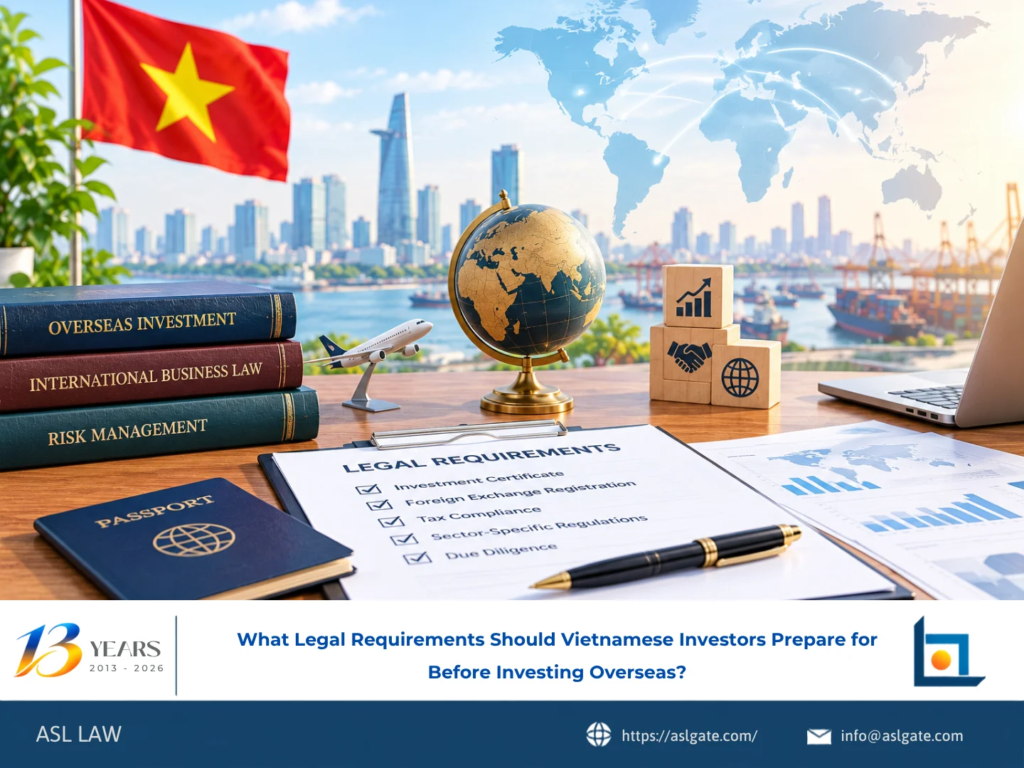
Understanding the legal requirements for Vietnamese outbound investment is essential for individuals and businesses planning to establish overseas operations, acquire foreign assets, or contribute capital to projects abroad. Vietnamese investors must consider both Vietnam’s outbound investment regulations and the laws of the destination country. Preparing the correct documents, securing necessary approvals, arranging foreign currency transfers, and meeting reporting obligations can help investors avoid delays and protect their capital throughout the investment process.
Determine Whether the Overseas Investment Requires Approval
The first step in preparing for overseas investment from Vietnam is to identify the proposed investment structure and determine which Vietnamese legal procedures apply.
Vietnam’s Law on Investment No. 61/2020/QH14, as amended, provides the legal framework for outbound investment. Depending on the project and applicable requirements, investors may need an outbound investment registration certificate or other approvals before transferring investment capital abroad.
Investors should establish whether they will create a foreign company, acquire shares in an existing business, contribute capital to a foreign project, or pursue another permitted investment arrangement. The investment structure affects the documentation and procedures involved.
Certain projects may be subject to additional scrutiny or approval requirements because of their scale, sector, or other statutory conditions. Investors should verify the rules applicable to their specific transaction rather than assuming that all overseas investments follow the same process.
Prepare Investment Documents and Financial Information
A compliance checklist for Vietnam investors abroad should include the documents necessary to explain the investment’s purpose, structure, financing, and expected implementation.
Depending on the project, these may include investor identification or corporate registration documents, the overseas investment proposal, evidence of financial capacity, information about the foreign recipient or project, and supporting documents required by the competent authorities.
Corporate investors should also review internal approval requirements under their charter, governance documents, and applicable Vietnamese law. Where multiple shareholders or members are involved, the investment may require formal approval by the relevant corporate body.
Documents issued overseas may need translation, notarization, or consular legalization, depending on the document and the applicable procedure. Preparing these materials early can reduce administrative delays.
Review Foreign Exchange and Capital Transfer Requirements
Legal requirements for Vietnamese outbound investment extend to the transfer and management of investment capital. Investors should not assume that obtaining investment approval automatically permits every planned remittance.
Capital transfers must comply with applicable foreign exchange regulations and relevant banking procedures. Investors should coordinate with an authorized credit institution to understand the documentation, account arrangements, and reporting requirements applicable to the transaction.
The investment plan should clearly identify the source of funds, proposed contribution schedule, expected foreign currency needs, and the intended method of transferring capital. Investors should also account for exchange-rate fluctuations, transaction fees, and the financial requirements of the destination country.
Failure to follow the required transfer procedures may delay the investment or create compliance difficulties. Financial arrangements should therefore be reviewed alongside the investment application, rather than treated as a separate administrative task at the final stage.
Assess the Destination Country’s Legal Requirements
Legal steps before investing overseas from Vietnam also include a detailed review of the destination country’s legal framework. Vietnamese approval does not replace the foreign country’s requirements for establishing a company, acquiring shares, obtaining sector licenses, or operating a business.
Investors should investigate foreign ownership restrictions, minimum capital rules, tax registration, employment obligations, licensing requirements, and restrictions on transferring profits or selling their investment.
They should also review the legal risks associated with the proposed business partners and investment assets. Due diligence can help identify undisclosed liabilities, ownership disputes, regulatory barriers, and contractual restrictions before funds are committed.
For investors considering a wider regional strategy, the planned structure should account for the laws of each relevant jurisdiction. A business preparing to open company in Vietnam while also investing overseas, for example, should assess the separate compliance obligations attached to each investment rather than treating the two processes as interchangeable.
Establish a Post-Investment Compliance Plan
Outbound investment legal prep for Vietnamese investors should continue beyond the approval and capital-transfer stages. Investors may have ongoing obligations to report investment progress, update relevant information, comply with approved investment arrangements, and submit required financial or operational reports.
They should maintain records of capital contributions, foreign investment accounts, overseas corporate documents, and transfers of profits or other lawful proceeds back to Vietnam. Any material change to the approved project may require further review or procedures under applicable law.
Businesses should assign responsibility for monitoring reporting deadlines and coordinating with banks, overseas subsidiaries, and professional advisers. A Law firm in Vietnam can assist with assessing outbound investment procedures, reviewing transaction documents, and identifying regulatory risks before capital is transferred.
For companies planning to set up a company in Vietnam and pursue overseas expansion, a coordinated compliance system can help manage domestic and foreign obligations more consistently.
FAQ
1. What are the main legal requirements for Vietnamese outbound investment?
Depending on the transaction, investors may need to obtain outbound investment approval or registration, prepare supporting documents, comply with foreign exchange procedures, and satisfy reporting obligations under Vietnamese law.
2. Do Vietnamese investors always need an outbound investment registration certificate?
The applicable procedure depends on the investment and the relevant legal requirements. Investors should assess their project’s structure, sector, scale, and circumstances to determine which approvals or registrations are required.
3. Can Vietnamese investors transfer investment capital abroad before completing the required procedures?
Investors should not transfer capital without first confirming that the applicable approval, account, and foreign exchange requirements have been satisfied. The permitted timing and procedure depend on the investment and relevant regulations.
4. Must investors comply with the destination country’s laws as well?
Yes. Vietnamese outbound investment approval does not exempt investors from foreign rules governing ownership, incorporation, taxation, licensing, employment, and business operations.
5. What should investors do after their overseas investment is approved?
They should follow the approved investment plan, maintain complete financial and corporate records, comply with capital-transfer and reporting requirements, and monitor any changes that may trigger additional legal procedures.
ASL Law is a leading full-service and independent Vietnamese law firm made up of experienced and talented lawyers. ASL Law is ranked as the top tier Law Firm in Vietnam by Legal500, Asia Law, WTR, and Asia Business Law Journal. Based in both Hanoi and Ho Chi Minh City in Vietnam, the firm’s main purpose is to provide the most practical, efficient and lawful advice to its domestic and international clients. If we can be of assistance, please email to [email protected].
ASL LAW is the top-tier Vietnam law firm for doing business in Vietnam. If you need any advice, please contact us for further information or collaboration.