Tiếng Việt
 中文 (中国)
 日本語

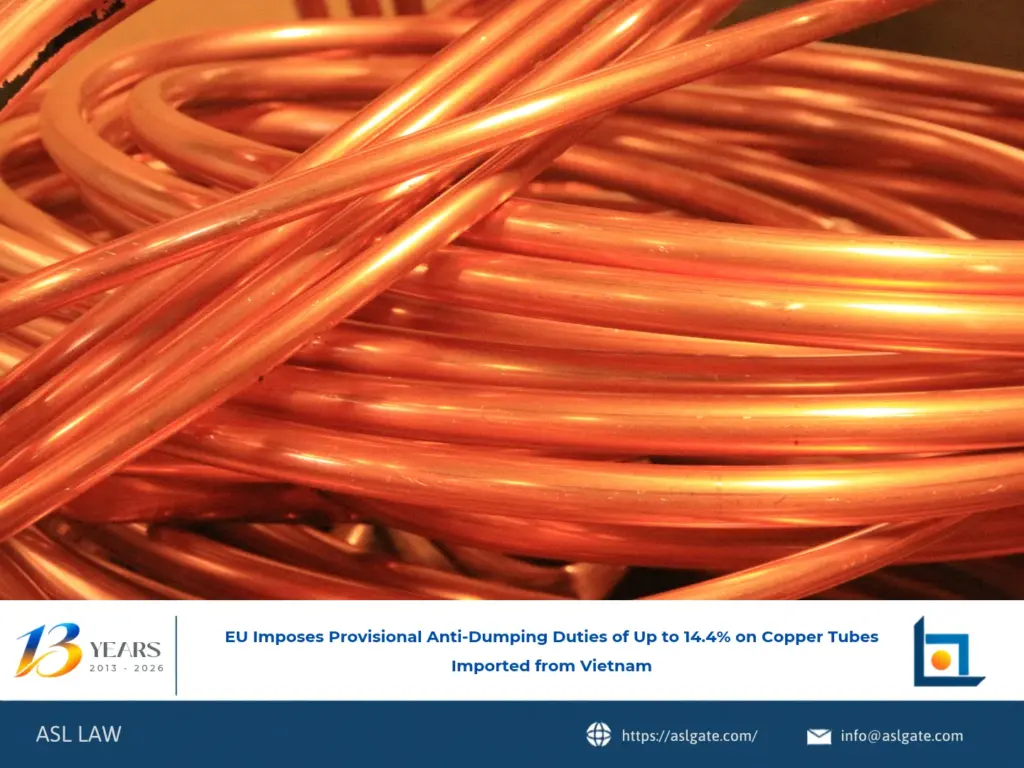
On November 10, 2026, the European Commission (EC) issued Regulation (EU) 2026/2497, officially imposing provisional anti-dumping measures on copper tube products imported from China, Mexico, Vietnam, and Uzbekistan. For Vietnam, provisional anti-dumping duty rates range from 12.3% to 14.4%, depending on the category of enterprise. The preliminary findings established that imports of copper tubes from Vietnam into the EU increased by 65% during the period examined and concluded that dumped imports had a causal link to the injury suffered by the EU copper tube industry. These findings create an urgent need for Vietnamese enterprises to review their export operations, assess the impact of the duties, and prepare for the subsequent stages of the investigation.
Overview of the EU Anti-Dumping Investigation into Copper Tubes
The EC initiated the investigation on March 12, 2026, following a complaint filed by the Defence Committee of the EU Copper Tube Industry. The product under investigation consists of tubes and pipes of refined copper, in pancake coils, either plain or internally grooved, not further worked, falling under CN code ex 7411 10 90.
Certain products are excluded from the scope of the investigation, including straight copper tubes, pancake-shaped coils, and copper tubes with insulation or external coatings.
The dumping and injury investigation period was set from January 1, 2025, to December 31, 2025. The EC also examined developments in the EU industry from January 1, 2022.
For Vietnam, the EC selected two sampled exporting producers, accounting for more than 90% of the total export volume of cooperating companies. The sampling process was intended to ensure representativeness when determining dumping margins and assessing the impact of imports from Vietnam.
Preliminary Dumping Margins for Vietnamese Enterprises
After examining the data submitted by enterprises and making adjustments in accordance with applicable regulations, the EC established the following preliminary dumping margins for products originating in Vietnam:
| Enterprise category | Preliminary dumping margin |
| Sampled exporting producers | 13.8% – 20.4% |
| Other cooperating companies | 17.4% |
| Non-cooperating or other companies | 20.4% |
Notably, the actual provisional anti-dumping duties are imposed on the CIF price at the EU border, before customs duty, and differ from the preliminary dumping margins:
| Enterprise category | Provisional anti-dumping duty |
| Two sampled exporting producers | 13.8% and 12.3% |
| Other cooperating companies | 13.3% |
| All other companies | 14.4% |
The difference between the dumping margins and provisional duty rates results from the EC’s application of the Lesser Duty Rule. Under this principle, the duty is set at a level no higher than necessary to eliminate injury to the EU industry where that level is lower than the dumping margin.
Compared with the other countries involved in the investigation, the provisional duties on Vietnamese copper tubes are lower than those imposed on China (33.5%–51.5%) and Mexico (18.2%), but higher than those applicable to Uzbekistan (5.6%–11%).
EU’s Preliminary Finding of Material Injury to the Copper Tube Industry
In its preliminary findings, the EC determined that the EU copper tube industry had suffered material injury, as evidenced by declining production, sales, market share, and the emergence of losses since 2023.
Regarding imports from Vietnam, import volumes into the EU increased by 65%, reaching 13,932 tonnes during the period examined. Vietnamese products accounted for approximately 12%–13% of the EU market.
Notably, import prices of Vietnamese copper tubes decreased by 7%, while global copper prices increased by 5%. Import prices were also approximately 8.22% lower than the selling prices of the EU industry.
Based on these findings, the EC preliminarily established a causal link between dumped imports from the investigated countries and the injury suffered by the EU copper tube industry.
This finding is particularly significant for Vietnamese enterprises because data on production volumes, export prices, and market share are being used as key indicators to assess the impact of Vietnamese products in the EU market.
EU’s Assessment of Alleged Distortions in Copper Raw Material Costs in Vietnam
One notable issue in the investigation concerns the complainant’s allegations regarding Vietnam’s export tax policy on copper cathodes.
According to the complainant, copper cathodes are the primary input material, accounting for more than 75% of copper tube production costs. The export tax policy applicable to this material could reduce domestic raw material prices, thereby providing a cost advantage to Vietnamese copper tube manufacturers.
However, in its preliminary findings, the EC determined that Vietnam’s copper cathode export tax policy did not affect the two Vietnamese enterprises selected as sampled exporting producers, as both companies used copper raw materials imported from overseas.
This finding demonstrates the importance of actual production cost assessments and raw material sourcing in trade remedy investigations. Enterprises must be able to substantiate the origin of raw materials, purchase prices, input costs, and related transactions through verifiable documentation.
Recommendations for Vietnamese Copper Tube Exporters
The EU’s imposition of provisional anti-dumping duties creates direct pressure on Vietnamese enterprises exporting copper tubes to this market. Businesses should proactively take the following measures:
- Review applicable duty rates: Identify the correct enterprise category and corresponding duty rate, avoiding confusion between preliminary dumping margins and provisional anti-dumping duties.
- Verify export data: Reconcile selling prices, export volumes, revenue, and transactions involving exports to the EU to ensure consistency with the information submitted during the investigation.
- Prepare evidence of production costs: Maintain raw material purchase invoices, copper cathode import documents, accounting data, and supporting records demonstrating the actual cost structure.
- Assess financial impacts: Calculate the effects of provisional duties on selling prices, profit margins, contracts, and competitiveness in the EU market.
- Continue participating in the investigation: Monitor subsequent EC notices and prepare comments and supporting evidence to defend duty rates that accurately reflect the enterprise’s actual circumstances.
In particular, enterprises that were not individually selected as sampled exporting producers should pay close attention to the duty rates applicable to other cooperating companies and the residual category of companies. Full cooperation, accurate information disclosure, and evidence substantiating production costs may significantly influence the duty treatment applicable to individual enterprises.
The copper tube investigation demonstrates that exporting to the EU requires more than maintaining price competitiveness. Vietnamese enterprises must also ensure that their accounting records, production data, and legal evidence are sufficiently prepared to respond effectively to trade remedy investigations.
To protect their legitimate interests, manufacturers and exporters should familiarize themselves with the procedure and actively contact Vietnam Antidumping Law Firm specializing in anti-dumping and trade remedy for timely assistance.
ASL Law is a leading full-service and independent Vietnamese law firm made up of experienced and talented lawyers. ASL Law is ranked as the top tier Law Firm in Vietnam by Legal500, Asia Law, WTR, and Asia Business Law Journal. Based in both Hanoi and Ho Chi Minh City in Vietnam, the firm’s main purpose is to provide the most practical, efficient and lawful advice to its domestic and international clients. If we can be of assistance, please email to [email protected].
ASL LAW is the top-tier Vietnam law firm for Anti-dumping & countervailing. If you need any advice, please contact us for further information or collaboration.