Tiếng Việt
 中文 (中国)
 日本語

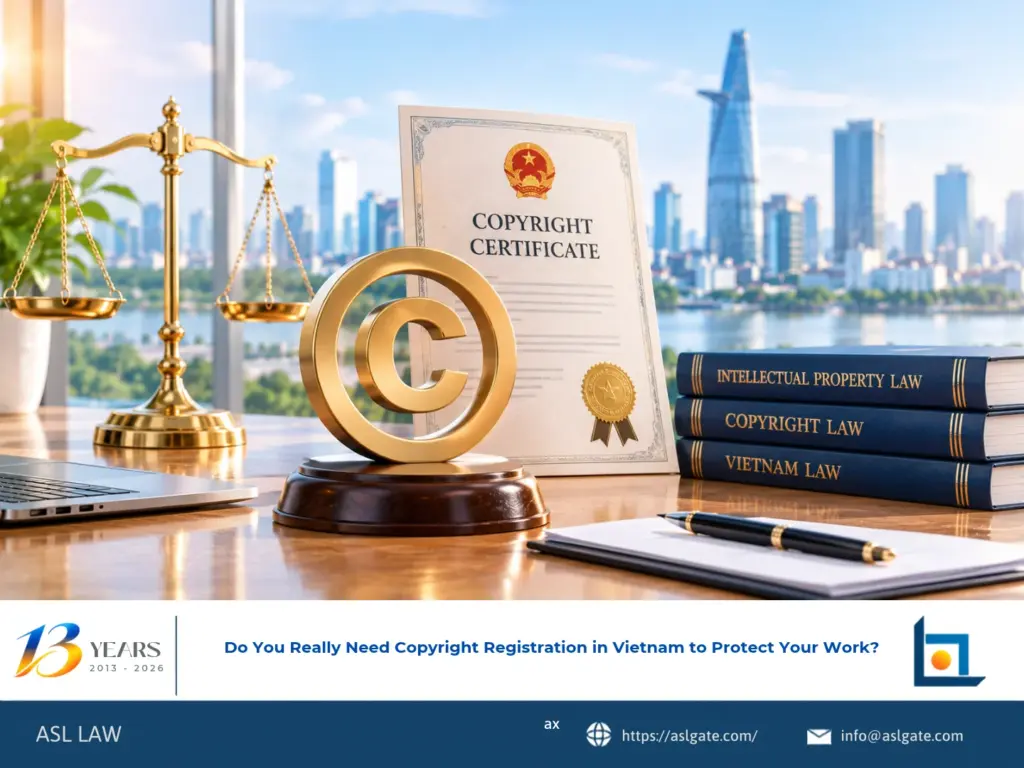
Is copyright registration required in Vietnam to protect creative works? Not necessarily. Under Vietnamese intellectual property law, copyright generally arises automatically when an eligible work is created and expressed in a material form. However, registering copyright can provide important evidentiary advantages, help establish ownership, and make it easier to protect creative assets in commercial transactions and infringement disputes. Foreign businesses should therefore consider copyright registration as part of their market protection strategy, particularly when their works have significant commercial value.
Copyright Protection Arises Automatically Under Vietnamese Law
One of the most important principles of copyright in Vietnam is that registration is not a mandatory condition for copyright protection. Under Article 6 of the Law on Intellectual Property, copyright generally arises when a work is created and expressed in a material form, regardless of whether it has been published or registered.
This means that authors and copyright owners may receive legal protection without first obtaining a copyright registration certificate. Eligible works include literary, artistic, and scientific works, computer programs, photographs, music, audiovisual works, and other protected creative expressions.
However, automatic protection does not mean that every idea or business concept is protected by copyright. Copyright generally protects the specific expression of an idea rather than the underlying idea, method, procedure, or principle itself.
Businesses asking, “Is copyright registration required in Vietnam?” should therefore distinguish between the existence of copyright and the practical ability to prove ownership. A company may own copyright automatically but still encounter difficulties demonstrating when a work was created, who created it, or how ownership was transferred.
Why Copyright Registration Is Still Beneficial
Although registration is voluntary, the benefits of registering copyright in Vietnam can be substantial when a work is commercially valuable or likely to be involved in licensing, assignment, or infringement disputes.
Under Article 49 of the Law on Intellectual Property, a person or organization holding a copyright registration certificate generally does not have to prove its copyright ownership during a dispute, unless contrary evidence is presented.
This evidentiary advantage can simplify the process of establishing ownership. It is particularly useful for businesses managing software, marketing materials, product designs, photographs, publications, and other creative assets.
A Vietnam copyright registration certificate may also support commercial activities involving licensing, assignment, franchising, and cooperation with business partners. It provides an official record of the registered information concerning the work, author, and copyright owner.
Nevertheless, registration does not guarantee that a dispute will be resolved in favor of the certificate holder. If another party presents evidence challenging authorship or ownership, the relevant circumstances and supporting documents may still need to be examined.
What Works Should Businesses Consider Registering?
Copyright registration necessity for protection in Vietnam depends largely on the nature and commercial importance of the work.
Businesses should consider registering works that are central to their products, services, or brand identity. Examples include:
- Computer software, applications, and source code.
- Marketing materials, photographs, and advertising content.
- Product packaging, graphic designs, and illustrations.
- Training materials, publications, and technical documentation.
- Music, videos, and other audiovisual content.
Companies should also distinguish copyright protection from trademark protection. For example, copyright may protect the original artistic expression of a logo, while trademark registration protects the sign used to distinguish goods or services in the marketplace.
Ownership is another important consideration. If employees, contractors, agencies, or external developers create works for a business, the company should review employment agreements, service contracts, and intellectual property assignment documents to establish the applicable ownership rights.
A Vietnam Intellectual Property law firm can assist businesses in reviewing ownership arrangements and identifying the appropriate protection strategy for their creative assets.
How to Register Copyright in Vietnam
Businesses and individuals may apply for copyright registration through the competent Vietnamese authority responsible for copyright administration. Applications may generally be submitted directly or through an authorized representative, subject to applicable filing requirements.
The application typically includes a copyright registration declaration, copies of the work, information identifying the author and copyright owner, and documents establishing the applicant’s ownership where necessary. Additional documents may be required for derivative works, jointly created works, or applications submitted through representatives.
Foreign authors and copyright owners may also obtain protection in Vietnam under applicable Vietnamese law and international copyright treaties, including the Berne Convention.
Foreign applicants should consider working with a qualified Vietnam intellectual property agent to review documentation, coordinate filing procedures, and address administrative requirements. An experienced intellectual property agent in Vietnam can also assist with assessing ownership documents and ensuring that the application accurately identifies the relevant parties and work.
The amended Law on Intellectual Property No. 131/2025/QH15 took effect on April 1, 2026. It reinforces the responsibility of applicants for the information provided in copyright registration applications. Businesses should therefore ensure that their declarations and supporting ownership documents are accurate and consistent.
Copyright Registration vs. Automatic Protection: Choosing the Right Strategy
The question of copyright registration vs automatic protection in Vietnam should be considered from both legal and commercial perspectives.
Automatic protection provides copyright without requiring an application, whereas registration provides an additional evidentiary advantage. Businesses do not necessarily need to register every creative work, but valuable assets that are frequently licensed, distributed, or commercially exploited may justify registration.
For foreign companies, copyright protection should form part of a broader intellectual property compliance strategy covering trademarks, patents, industrial designs, and trade secrets.
Businesses can consider professional copyright registration in Vietnam support when preparing applications and managing their portfolios. A broader understanding of Vietnam copyright registration procedures can also help companies establish consistent internal processes for documenting ownership and protecting creative assets.
Ultimately, copyright registration is not always legally necessary, but it can be commercially valuable. A Vietnam copyright protection strategy should reflect the value of the work, ownership structure, commercial use, and potential enforcement risks.
Frequently Asked Questions
1. Is copyright registration required in Vietnam?
No. Copyright generally arises automatically when an eligible work is created and expressed in a material form. Registration is voluntary, although it provides useful evidentiary advantages.
2. Do you need to register work copyright in Vietnam to obtain legal protection?
No. Registration is not a prerequisite for copyright protection. However, registration may make it easier to establish ownership if a dispute arises.
3. What are the main benefits of registering copyright in Vietnam?
Registration provides an official record of the work and its identified author or owner. A certificate can also provide an evidentiary advantage in disputes and support commercial transactions involving copyright.
4. Can foreign businesses register copyright in Vietnam?
Yes. Foreign authors and copyright owners may obtain protection under Vietnamese law and applicable international treaties. They should prepare the relevant ownership documents and comply with Vietnamese registration procedures.
5. Does copyright registration protect a company’s logo and brand name?
Copyright may protect the original artistic expression of a logo, but it does not replace trademark registration. Businesses should consider trademark protection separately when protecting brand identifiers used in commerce.
ASL Law is a leading full-service and independent Vietnamese law firm made up of experienced and talented lawyers. ASL Law is ranked as the top tier Law Firm in Vietnam by Legal500, Asia Law, WTR, and Asia Business Law Journal. Based in both Hanoi and Ho Chi Minh City in Vietnam, the firm’s main purpose is to provide the most practical, efficient and lawful advice to its domestic and international clients. If we can be of assistance, please email to [email protected].
ASL LAW is the top-tier Vietnam law firm for Intellectual Property Services. If you need any advice, please contact us for further information or collaboration.