Tiếng Việt
 中文 (中国)
 日本語

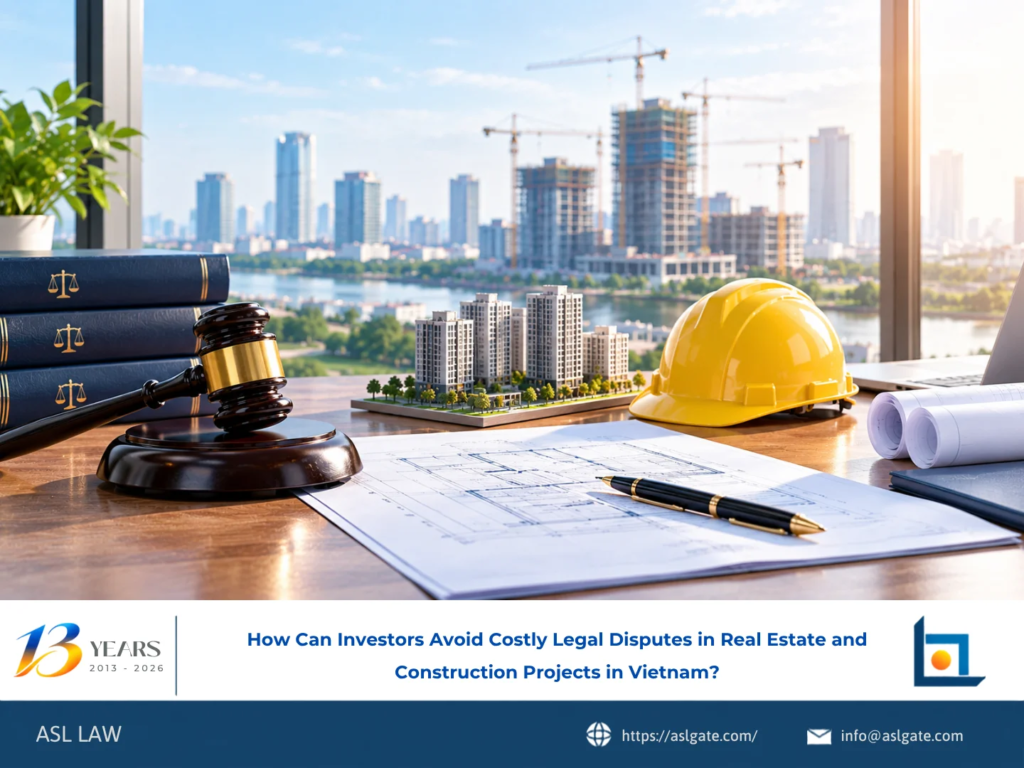
Real estate and construction projects in Vietnam can offer substantial investment opportunities, but disputes over land rights, project approvals, construction quality, payments, and contractual obligations can quickly increase costs and delay completion. Avoiding legal disputes in Vietnam real estate projects requires investors to identify risks early, conduct thorough due diligence, and establish clear contractual and project management procedures before committing significant capital.
Conduct Legal Due Diligence Before Investing
Investors should verify the legal status of a project before acquiring property, contributing capital, or signing construction contracts. This includes reviewing land-use rights, planning information, project approvals, construction permits where required, ownership records, and any mortgages, disputes, or restrictions affecting the property.
For foreign investors, additional checks may be necessary to determine whether the proposed investment structure and business activities comply with applicable investment and real estate regulations.
Effective legal due diligence to avoid disputes in Vietnam also requires checking whether the project can realistically proceed as planned. A commercially attractive property may still carry significant legal risks if approvals are incomplete, land clearance remains unresolved, or the developer cannot demonstrate the necessary rights.
Draft Construction Contracts That Allocate Risks Clearly
Contractual ambiguity is a common source of construction disputes. Investors and developers should ensure that contracts clearly define the scope of work, technical specifications, completion milestones, payment conditions, variation procedures, delay liabilities, warranties, and termination rights.
Vietnam’s Construction Law No. 135/2025/QH15 took effect on July 1, 2026, alongside implementing regulations including Decree No. 210/2026/ND-CP on construction contracts. These rules make it particularly important to review construction agreements against the applicable legal framework and the specific requirements of the project.
Preventing costly construction disputes Vietnam therefore begins with contracts that address foreseeable problems instead of relying on informal understandings between project participants.
Control Project Changes, Payments, and Construction Quality
Even a well-drafted contract cannot prevent every disagreement. Investors need procedures for managing changes to the design, scope, materials, deadlines, and budget. Instructions and approvals should be documented, while payment claims should be checked against contractual milestones and verified work.
Regular site inspections, independent technical assessments where appropriate, and clear acceptance procedures can reduce disagreements about construction quality and incomplete work. Investors should also retain progress reports, meeting minutes, invoices, inspection records, and written notices.
These measures form part of effective risk management for real estate investors Vietnam because they help identify problems while corrective action is still possible.
Identify Risks in Land, Permits, and Project Approvals
Land-related problems can undermine an otherwise viable investment. Investors should confirm the permitted land use, applicable planning requirements, access arrangements, and the status of compensation or site clearance. They should also check whether the project’s design and construction arrangements comply with relevant approval requirements.
Legal reviews should continue throughout the project rather than stop after the initial investment decision. Changes in project scope, ownership, financing, or construction plans may trigger additional legal or administrative requirements.
A Law firm in Vietnam can help investors assess these issues, coordinate legal reviews, and identify potential disputes before they affect project delivery.
Establish a Dispute Prevention and Resolution Strategy
Dispute prevention in Vietnam construction projects requires more than reacting when a conflict arises. Contracts should establish escalation procedures, negotiation periods, and a suitable dispute resolution mechanism, such as court proceedings or arbitration, where legally available and appropriate.
Investors should consider the project’s value, the location of the parties and assets, enforcement considerations, and the need to keep construction moving during a dispute. Under Vietnam’s 2026 construction framework, the handling of construction contract disputes should be reviewed in light of the applicable statutory rules and the parties’ agreements.
For cross-border projects, a Vietnam full Service law firm may assist with coordinating investment, real estate, construction, and dispute resolution issues. Where investors have China-related business interests, a Chinese Law Firm in Hanoi may also be relevant to their legal coordination needs.
FAQ
1. What are the most common causes of real estate and construction disputes in Vietnam?
Common causes include unclear land rights, incomplete approvals, payment delays, variations in project scope, construction defects, missed deadlines, and ambiguous contractual obligations.
2. Why is legal due diligence important before investing in real estate?
It helps investors identify ownership issues, land-use restrictions, approval gaps, encumbrances, and other risks that could affect project feasibility or lead to disputes.
3. How can construction contracts reduce the risk of disputes?
Contracts should clearly define work scope, payment milestones, change procedures, deadlines, quality standards, liability, termination rights, and dispute resolution mechanisms.
4. What should investors do when a construction dispute begins to emerge?
They should preserve relevant records, review the contract, notify the other party in accordance with contractual requirements, assess the financial and operational impact, and pursue the agreed resolution process.
5. Can legal advisers help prevent disputes rather than simply resolve them?
Yes. Early due diligence, contract review, ongoing compliance monitoring, and timely advice on project changes can help identify risks before they develop into costly disputes.
ASL Law is a leading full-service and independent Vietnamese law firm made up of experienced and talented lawyers. ASL Law is ranked as the top tier Law Firm in Vietnam by Legal500, Asia Law, WTR, and Asia Business Law Journal. Based in both Hanoi and Ho Chi Minh City in Vietnam, the firm’s main purpose is to provide the most practical, efficient and lawful advice to its domestic and international clients. If we can be of assistance, please email to [email protected].
ASL LAW is the top tier Real Estate law firm in Vietnam. If you need any advice, please contact us for further information or collaboration.