Tiếng Việt
 中文 (中国)
 日本語
日本語
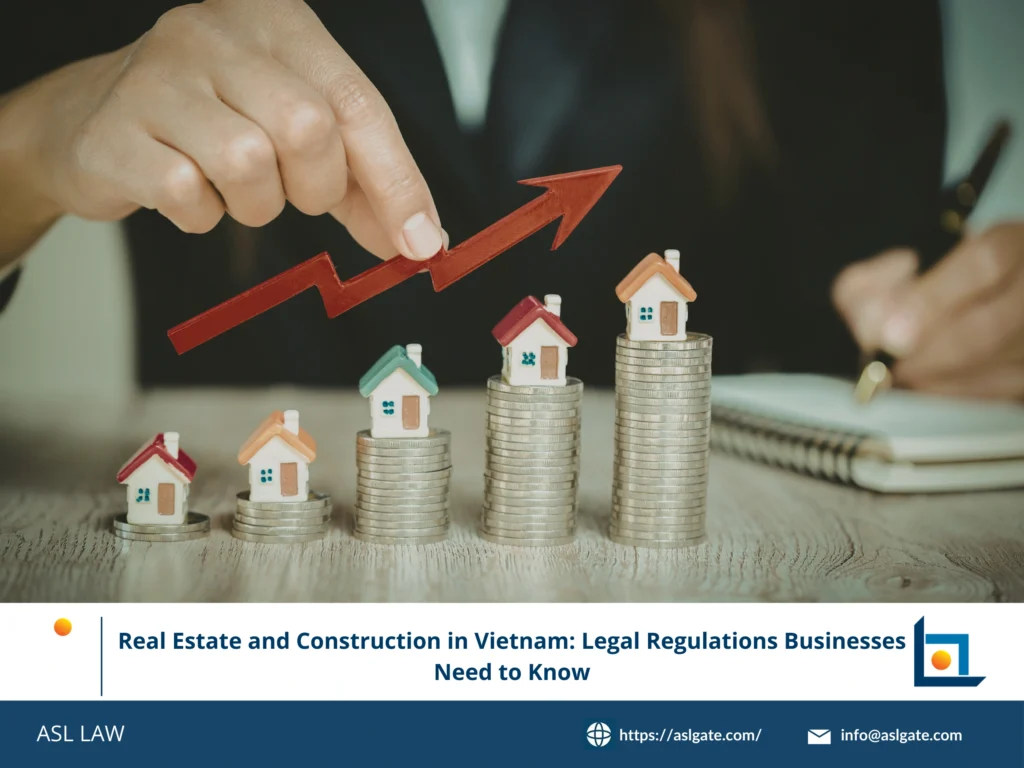
Vietnam’s property market continues to attract domestic and foreign investors due to strong urbanization, infrastructure expansion, and manufacturing growth. However, recent legislative reforms have significantly reshaped compliance obligations. Understanding real estate and construction legal regulations Vietnam 2026 is essential for developers, contractors, and foreign investors seeking to operate safely and efficiently.
Overview of Real Estate and Construction in Vietnam – Legal Regulations Vietnam 2026
The legal framework governing real estate and construction in Vietnam consists of the Law on Construction, the Law on Real Estate Business, the Housing Law, the Land Law, and various implementing decrees and circulars. Amendments adopted in recent years aim to improve transparency, digitalization, and project supervision.
Real estate and construction legal regulations Vietnam 2026 emphasize:
- Enhanced project approval and licensing procedures
- Greater transparency in land allocation and land-use rights
- Stricter compliance standards for contractors
- Increased administrative penalties for violations
- Digital transformation in land and property management
Businesses must ensure full regulatory alignment before initiating any development or acquisition transaction.
New Law on Construction 2025 Vietnam Key Provisions
New Law on Construction 2025 Vietnam key provisions introduce reforms designed to streamline procedures while strengthening oversight.
Key highlights include:
- Simplified construction permit processes for certain categories of projects
- Clearer classification of construction works
- Enhanced supervision responsibilities for investors and project managers
- Stronger safety and environmental compliance standards
- Expanded use of digital submission systems
The revised framework also clarifies liability allocation among investors, contractors, consultants, and supervising entities, reducing ambiguity in dispute resolution.
Property Digital ID Codes Vietnam Effective March 2026
Property digital ID codes Vietnam effective March 2026 represent a major step toward modernization of land and property administration. Under this reform, each property unit will be assigned a unique digital identification code integrated into the national land database.
The objectives include:
- Improving transparency in ownership records
- Reducing fraud and duplicate transactions
- Facilitating faster mortgage registration and transfer procedures
- Enhancing tax administration and compliance monitoring
Businesses engaging in property acquisition or development must verify digital property identification status to ensure accurate ownership and legal validity.
Enterprises doing business in Vietnam should consider contacting a Vietnam full Service law firm capable of providing Vietnam corporate legal services tailor-based to the enterprises’ specific needs.
Foreign Investors Real Estate Vietnam Legal Requirements
Foreign investors real estate Vietnam legal requirements vary depending on the investment structure and asset type.
Foreign entities may:
- Establish a foreign-invested enterprise (FIE) to conduct real estate business
- Lease land from the State for approved projects
- Acquire shares in existing real estate companies
- Purchase certain types of residential property within statutory limits
However, foreign investors are subject to:
- Oversea investment registration certificate and enterprise registration procedures
- Project approval and land-use rights allocation
- Restrictions on land ownership (Vietnam maintains land ownership by the State)
- Capital contribution and minimum equity requirements
- Sector-specific licensing conditions
Careful legal due diligence and regulatory planning are essential before entering transactions.
Social Housing Development Regulations Vietnam 2026
Social housing development regulations Vietnam 2026 focus on expanding affordable housing supply for low-income earners and industrial workers.
Recent policies include:
- Mandatory allocation of land for social housing in certain commercial projects
- Incentives such as land-use fee exemptions or reductions
- Preferential credit programs for developers and buyers
- Clearer eligibility criteria for beneficiaries
- Stricter supervision of project implementation timelines
Developers participating in social housing projects must comply with pricing controls, beneficiary selection standards, and reporting obligations.
Construction Licensing and Project Approval Process
Before commencing construction, businesses must typically complete:
- Investment approval (if required).
- Land-use rights allocation or lease agreement.
- Environmental impact assessment approval.
- Construction design appraisal.
- Construction permit issuance.
Failure to comply with these steps may result in administrative penalties, suspension, or forced demolition.
Digitalization reforms are gradually reducing paperwork, but regulatory coordination among authorities remains crucial.
Risk Management and Compliance Strategies
Companies operating in real estate and construction in Vietnam‘s sectors should:
- Conduct comprehensive legal due diligence before acquiring land or projects.
- Verify zoning and land-use planning compliance.
- Monitor legislative updates annually.
- Maintain transparent documentation for inspections.
- Implement internal compliance systems aligned with construction safety standards.
Regulatory scrutiny is increasing, particularly for large-scale developments and foreign-invested projects.
Frequently Asked Questions (FAQ)
- What are the major changes in real estate and construction legal regulations Vietnam 2026?
Recent reforms focus on transparency, digital property management, and streamlined licensing procedures. - What is the significance of property digital ID codes Vietnam effective March 2026?
They enhance ownership transparency, reduce fraud, and facilitate efficient property transactions. - Can foreign investors own land in Vietnam?
No. Land is owned by the State, but foreign investors may obtain land-use rights through approved oversea investment structures. - Are social housing projects mandatory for developers?
In certain cases, commercial projects must allocate land or resources for social housing development. - Is a construction permit always required?
Most projects require permits, though some categories may benefit from simplified procedures under the new law.
Conclusion
Vietnam’s real estate and construction sector presents significant opportunities but also complex regulatory obligations. Real estate and construction legal regulations Vietnam 2026 introduce important reforms in digital property management, licensing procedures, and oversea investment compliance. By understanding new Law on Construction 2025 Vietnam key provisions, preparing for property digital ID codes Vietnam effective March 2026, and aligning with social housing development regulations Vietnam 2026, businesses can mitigate legal risks and position themselves for sustainable growth in one of Southeast Asia’s most dynamic property markets.
ASL Law is a leading full-service and independent Vietnamese law firm made up of experienced and talented lawyers. ASL Law is ranked as the top tier Law Firm in Vietnam by Legal500, Asia Law, WTR, and Asia Business Law Journal. Based in both Hanoi and Ho Chi Minh City in Vietnam, the firm’s main purpose is to provide the most practical, efficient and lawful advice to its domestic and international clients. If we can be of assistance, please email to [email protected].
ASL LAW is the top tier Real Estate law firm in Vietnam. If you need any advice, please contact us for further information or collaboration.