Tiếng Việt
 中文 (中国)
 日本語
日本語
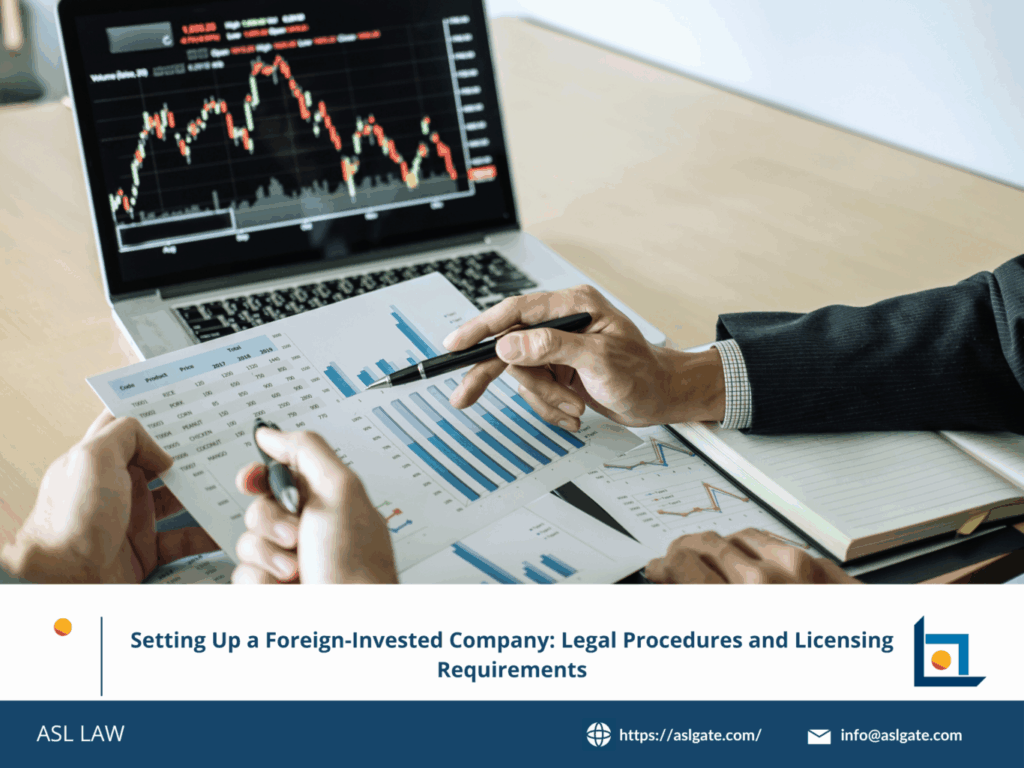
Foreign investors looking to enter the Vietnamese market must carefully navigate the legal framework governing the establishment of foreign-invested enterprises (FIEs). From choosing the right legal entity to obtaining oversea investment and business licenses, each step requires detailed planning and regulatory compliance.
Choosing the Right Legal Structure
The most common forms of FIEs in Vietnam include limited liability companies (LLCs), joint-stock companies (JSCs), and partnerships. The choice depends on business objectives, capital structure, number of investors, and operational flexibility.
- LLCs are suitable for small to medium-sized ventures with fewer members and simplified governance.
- JSCs allow broader capital mobilization and are preferred for larger-scale or publicly listed businesses.
- Partnerships are less common and involve unlimited liability for general partners.
Investment Registration Certificate (IRC)
Foreign investors must first apply for an IRC, which records the project details, capital contribution, and oversea investment terms. The issuance is subject to Vietnam’s market access commitments under international treaties and domestic sectoral restrictions.
Key information includes:
- Investor’s identity
- Investment project location
- Total capital and contribution schedule
- Investment incentives, if applicable
Enterprise Registration Certificate (ERC)
After obtaining the IRC, the investor must apply for an ERC to formally establish the enterprise as a legal entity. This step is similar to domestic company registration but must be aligned with the project approved in the IRC.
Sector-Specific Licensing and Approvals
In addition to the IRC and ERC, businesses in conditional sectors (e.g., fintech, logistics, education, healthcare) must secure additional licenses. These may include:
- Operational permits
- Professional licenses
- Sub-licenses from line ministries or local departments
Capital Contribution and Timeline Compliance
Investors must contribute the registered capital as declared in the IRC within the statutory timeframe (typically 90 or 180 days). Delays may trigger penalties or license revocation.
Conclusion
Establishing a foreign-invested company in Vietnam involves multi-step legal procedures requiring compliance with both oversea investment and enterprise laws. Understanding the appropriate structure and securing the necessary licenses from the outset helps foreign investors minimize risks and ensure smooth market entry.
ASL Law is a leading full-service and independent Vietnamese law firm made up of experienced and talented lawyers. ASL Law is ranked as the top tier Law Firm in Vietnam by Legal500, Asia Law, WTR, and Asia Business Law Journal. Based in both Hanoi and Ho Chi Minh City in Vietnam, the firm’s main purpose is to provide the most practical, efficient and lawful advice to its domestic and international clients. If we can be of assistance, please email to [email protected].
ASL LAW is the top-tier Vietnam law firm for Investment Services. If you need any advice, please contact us for further information or collaboration.