Tiếng Việt
 中文 (中国)
 日本語
日本語
The energy sector in Vietnam has been undergoing significant transformation, driven by economic growth, rising energy demand, and the country’s commitment to sustainable development. For enterprises and investors doing business in Vietnam, keeping up with energy sector legal updates Vietnam and understanding the framework for project implementation energy Vietnam are key to seizing investment opportunities…

30
Jun
Jun
Expanding into international markets is one of the most ambitious steps for any business. While global expansion promises access to new customers, greater brand recognition, and diversified revenue streams, it also comes with legal complexities that can make or break success. From navigating foreign investment regulations to ensuring compliance with local laws, enterprises doing business…
11
Oct
Oct
Establishing a company in Vietnam is an important step for foreign and domestic investors who want to enter a dynamic and fast-growing market. To ensure compliance and efficiency, enterprises doing business in Vietnam need to understand the legal framework, procedural requirements, and specific regulations applicable to investors. Key Legal Requirements for Company Establishment in Vietnam…
25
Oct
Oct
Foreign direct investment (FDI) has played a major role in Vietnam’s economic growth. However, despite the country’s openness to foreign capital, certain business areas remain restricted or conditional for overseas investors. Understanding the Vietnam FDI restricted sectors list is essential for compliance and for building a sustainable investment strategy. Legal Framework Governing FDI in Vietnam…
27
Oct
Oct
Vietnam has become one of the most attractive destinations for foreign investors thanks to its fast-growing economy, young workforce, and integration into global trade agreements. However, doing business in Vietnam requires careful attention to both the legal framework and market conditions. Foreign investors, tech entrepreneurs, and multinational companies should familiarize themselves with legal considerations business…
08
Oct
Oct
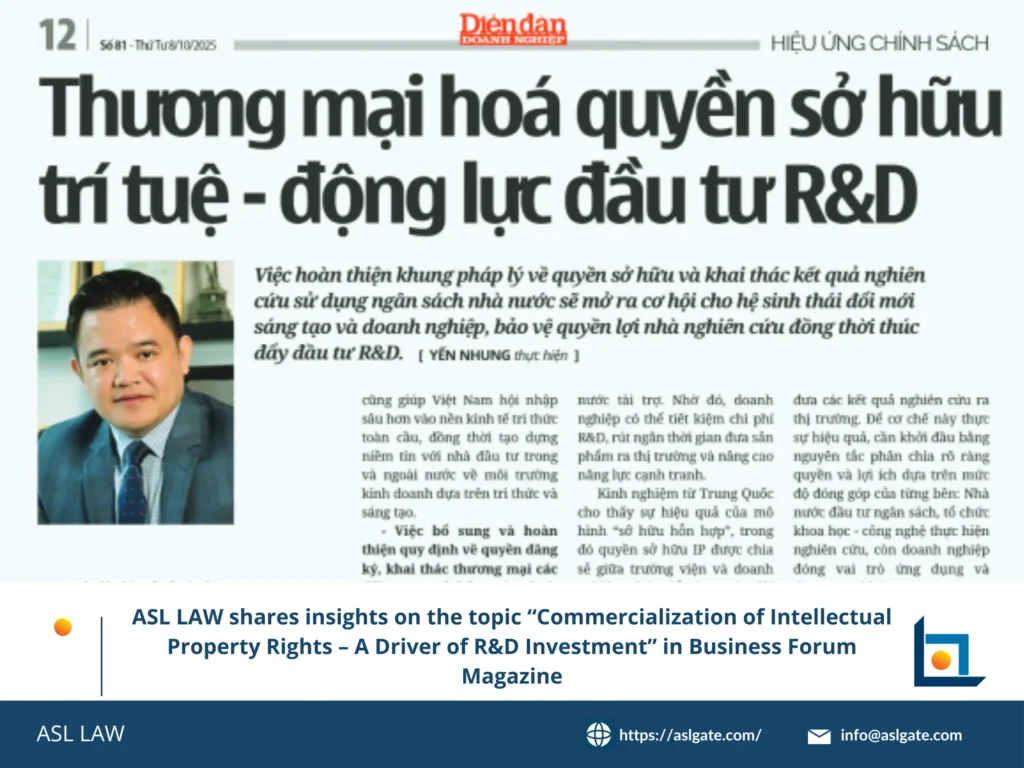
ASL LAW has recently published an in-depth article in Business Forum Magazine on the topic “Commercialization of Intellectual Property Rights – A Driver of R&D Investment,” contributed by Lawyer Pham Duy Khuong, Managing Partner of ASL LAW. The article analyzes the pivotal role of monetizing intellectual property (IP) assets in fostering innovation, enhancing competitiveness, and…
30
Sep
Sep
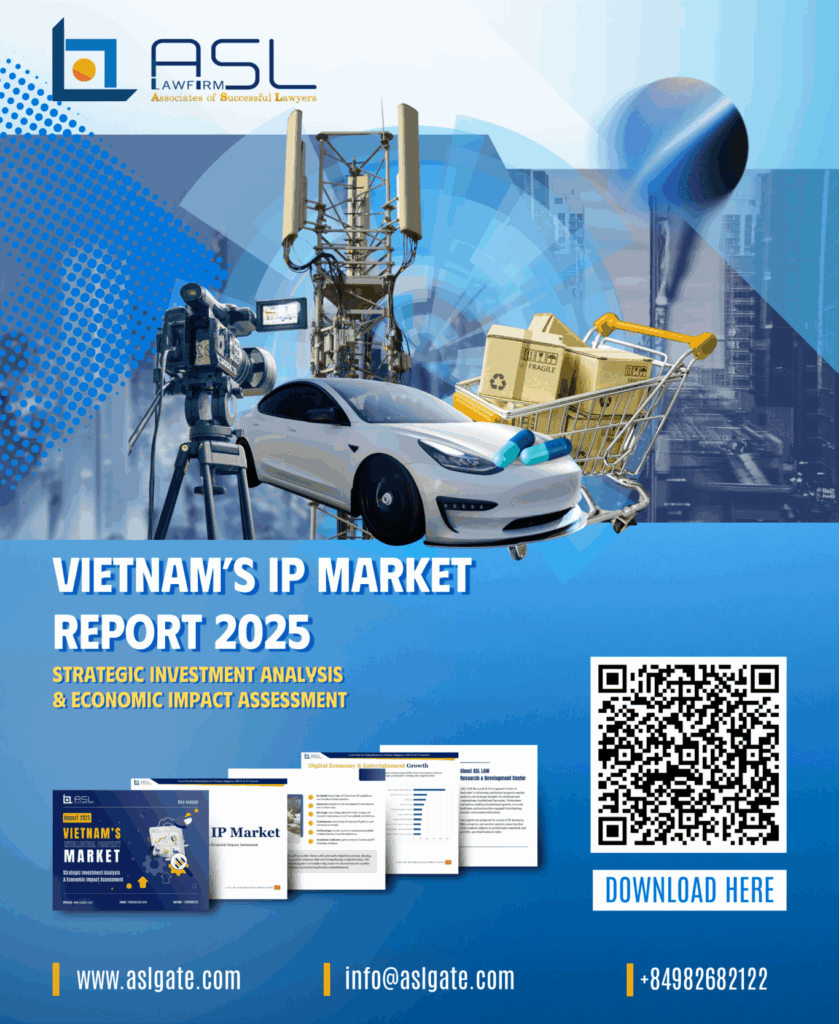
𝑇ℎ𝑒 𝑟𝑒𝑝𝑜𝑟𝑡 𝑑𝑜𝑤𝑛𝑙𝑜𝑎𝑑 𝑙𝑖𝑛𝑘 𝑖𝑠 𝑎𝑣𝑎𝑖𝑙𝑎𝑏𝑙𝑒 𝑎𝑡 𝑡ℎ𝑒 𝑒𝑛𝑑 𝑜𝑓 𝑡ℎ𝑖𝑠 𝑎𝑟𝑡𝑖𝑐𝑙𝑒. On October 1st, 2025, ASL LAW proudly announces the official release of the Vietnam IP Market Report 2025 – Strategic Investment Analysis & Economic Impact Assessment. This is the first comprehensive report ever dedicated to Vietnam’s Intellectual Property (IP) market, designed to serve…
08
Jul
Jul
Vietnam has positioned itself as a regional leader in renewable energy development, with strong commitments to clean energy transition and carbon neutrality by 2050. As of 2025, the legal framework governing bidding and implementation of clean energy projects has undergone significant updates, reflecting the government’s efforts to enhance transparency, attract offshore investment, and ensure sustainable…
14
Jul
Jul
Related-party transactions (RPTs) are a common feature of multinational operations, but in Vietnam they attract close scrutiny from tax authorities due to concerns over transfer pricing and profit shifting. Offshore investment enterprises doing business in Vietnam must carefully manage their intercompany dealings to ensure compliance with Vietnamese regulations, particularly as transfer pricing enforcement has intensified…
30
Jun
Jun
Vietnam is one of the most attractive markets in Southeast Asia for foreign investors doing business in Vietnam due to its strong economic growth and increasing integration into global trade. However, choosing the right type of enterprise is a crucial step that determines how efficiently the investment in ASEAN turns out. Each legal structure has…