Tiếng Việt
 中文 (中国)
 日本語
日本語
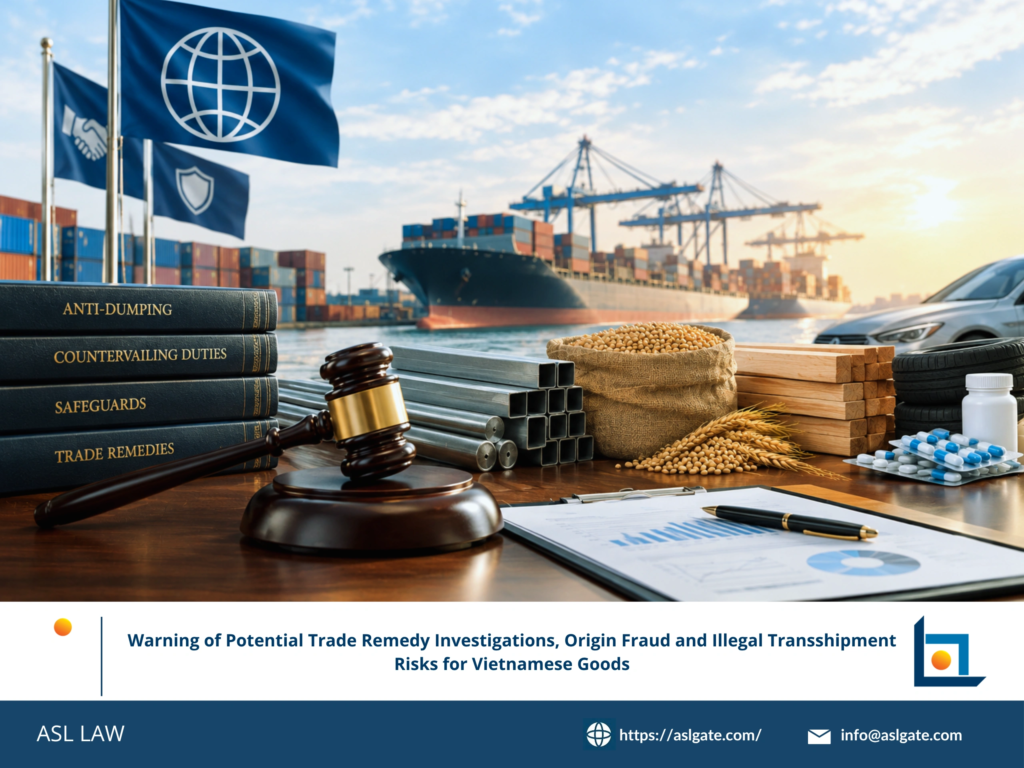
As Vietnam’s exports continue to expand in major markets such as the United States, EU, Canada, India and Australia, the risk of Vietnamese goods becoming subject to trade remedy proceedings, anti-circumvention investigations, or origin-related investigations is also increasing. In particular, products with large export values, high growth rates, or products that are currently subject to trade remedy measures in importing markets against competing countries require close monitoring by businesses.
The current warning list covers various product groups, ranging from wood, steel and metals to materials and manufactured industrial products.
Wood Products Face Elevated Risks in the United States and Canada
Certain wood products and furniture account for a significant share of total imports in major markets.
For wooden-frame sofas exported to the United States, Vietnam’s export value reached USD 831.4 million in the first three months of 2026, accounting for approximately 62% of the United States’ total imports of similar products. While the United States has imposed anti-dumping and countervailing duties on similar products from China, Vietnam’s position as the largest supplier increases the risk that these products may be subject to monitoring or potential investigations in the future.
Similarly, Vietnam’s exports of bedroom furniture to the United States reached USD 408.7 million in the first three months of 2026, accounting for 58.9% of total U.S. imports of similar products. The United States has maintained anti-dumping and countervailing measures on products from China for many years. Vietnam’s significant market share means that the potential for trade remedy or anti-circumvention investigations should be closely monitored.
In Canada, upholstered seats are another notable case. Although products from Vietnam are currently subject to trade remedy measures, exports during the first three months of 2026 still reached USD 52.4 million, up 22.3% year-on-year and accounting for approximately 20% of Canada’s total imports of the product.
Steel Products Remain a Key Area for Monitoring
Steel products exported to the EU, Australia, the United States and Canada have also been identified as products warranting particular attention.
In the EU, Vietnam’s exports of cold-rolled flat steel reached USD 28.9 million in the first three months of 2026, accounting for 9.5% of total EU imports of similar products. The EU currently applies anti-dumping measures to similar products from several sources, including China, Russia, Brazil, Ukraine and Iran. Although Vietnam’s export value has declined year-on-year, its market share remains significant and should continue to be monitored.
Several other steel products have shown more notable trends. Vietnam’s exports of iron or steel bolts and screws to the EU reached USD 47.7 million, up 5.8%, while cold-rolled stainless steel reached USD 31.6 million, up 13.1%. Meanwhile, the EU continues to maintain anti-dumping measures on similar products from China and several other countries.
In Australia, hot-rolled sections and hollow structural sections are also on the warning list. Notably, Australia has imposed anti-dumping measures on similar products from several Asian markets. Vietnamese businesses should pay particular attention to their ability to substantiate the origin and source of raw materials if export volumes increase again.
Prestressing steel strands exported to the United States are another product presenting a notable level of risk. Vietnam accounted for approximately 34.6% of total U.S. imports of this product during the first three months of 2026 and is currently the largest supplier. Meanwhile, the United States has imposed trade remedy measures on similar products from various markets, including China, Japan, Korea, Thailand, Indonesia, Malaysia and India.
Other Metal Products with Significant Market Shares
In addition to steel, certain aluminum and copper products have also recorded significant export growth.
Vietnam’s exports of aluminum bars and profiles to Canada reached USD 24.5 million in the first three months of 2026, up 65.7% and accounting for 8.6% of Canada’s total imports of similar products. Vietnam is currently the third-largest supplier to the Canadian market, after the United States and China.
More notably, exports of copper tubes to Canada reached USD 13.8 million, representing a substantial increase of 164.2% and accounting for 38.3% of Canada’s total imports of similar products. Vietnam is currently the largest supplier of this product to the Canadian market, while Canada has imposed anti-dumping measures on similar products from China, Korea, Mexico, Brazil and Greece.
Aluminum wire and cable exports to the United States also increased sharply, reaching USD 23.1 million in the first three months of 2026, up 88.2%. Against the backdrop of the United States imposing anti-dumping and countervailing duties on similar products from China, Vietnamese businesses should monitor the potential for new investigations or anti-circumvention investigations if exports continue to increase.
Certain Materials and Textile Products Also Require Attention
Float glass is one of the products with a significant market share in both the United States and India. In the United States, Vietnam’s exports reached USD 22.8 million, up 34.6% and accounting for 11.6% of total U.S. imports. In India, exports reached USD 20.6 million, accounting for 28.2% of total imports of similar products. Both markets currently apply anti-dumping measures to products from certain competing countries.
In the textile sector, Vietnam’s exports of high-tenacity polyester yarn to the EU reached USD 29.2 million, accounting for as much as 38.1% of the EU’s total imports of similar products. The EU currently applies anti-dumping duties on products from China. This is one of the cases in which Vietnamese businesses should pay particular attention to the sourcing of raw materials and their ability to demonstrate substantial manufacturing operations in Vietnam.
Polyester staple fibers with a diameter of less than 3 denier exported to the United States are also included in the warning list. Vietnam’s exports during the first three months of 2026 reached nearly USD 6.9 million, up 75.4% and accounting for 25.2% of total U.S. imports. This product has previously been subject to trade remedy investigations in the United States involving various sources of supply.
Risks Extend Beyond Trade Remedy Duties
The warning list also highlights a notable trend: risks facing Vietnamese businesses are not limited to potential anti-dumping or countervailing duty investigations, but may also arise from anti-circumvention investigations and origin verification proceedings.
Certain products, such as wood strips, bedroom furniture, prestressing steel strands, high-tenacity polyester yarn and other industrial products, have been flagged in connection with the use of raw materials or key components imported from China. When Vietnam becomes an alternative source of supply for countries whose products are subject to trade remedy measures, investigating authorities in importing markets may examine whether goods exported from Vietnam have genuinely undergone sufficient processing to satisfy applicable rules of origin or have merely undergone processing or assembly intended to change the country of origin.
Accordingly, businesses in the flagged product groups should proactively monitor their supply chains and maintain records relating to the origin of raw materials, production processes, costs and export transactions. Establishing a documentation system capable of tracing products from input materials through to exported goods will enable businesses to respond more effectively if foreign investigating authorities conduct verification proceedings.
Businesses should also regularly monitor Vietnam’s export value and market share in each market, particularly for products experiencing high growth rates or already accounting for a significant proportion of the importing country’s total imports. Early identification of potential risk indicators will give businesses more time to prepare response strategies before a formal trade remedy or anti-circumvention investigation is initiated.
To protect their legitimate interests, manufacturers and exporters should familiarize themselves with the procedure and actively contact Vietnam Antidumping Law Firm specializing in anti-dumping and trade remedy for timely assistance.
ASL Law is a leading full-service and independent Vietnamese law firm made up of experienced and talented lawyers. ASL Law is ranked as the top tier Law Firm in Vietnam by Legal500, Asia Law, WTR, and Asia Business Law Journal. Based in both Hanoi and Ho Chi Minh City in Vietnam, the firm’s main purpose is to provide the most practical, efficient and lawful advice to its domestic and international clients. If we can be of assistance, please email to [email protected].
ASL LAW is the top-tier Vietnam law firm for Anti-dumping & countervailing. If you need any advice, please contact us for further information or collaboration.