Tiếng Việt
 中文 (中国)
 日本語
日本語
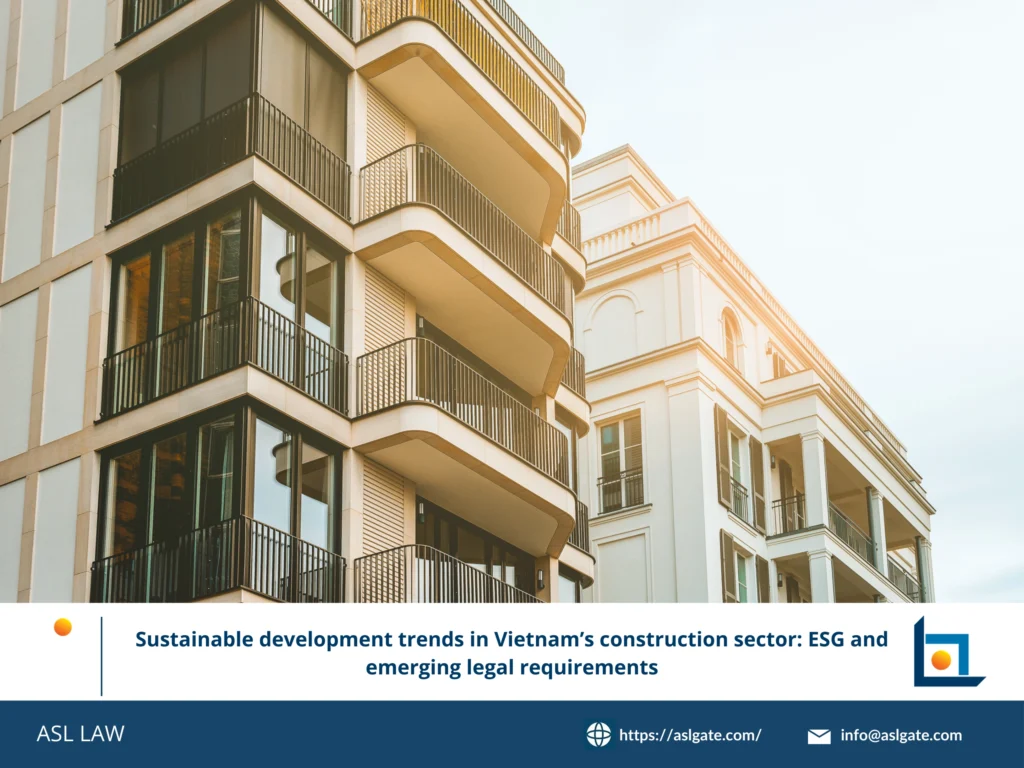
Vietnam’s construction sector is undergoing a structural transformation driven by sustainability imperatives, ESG expectations, and tightening legal requirements. For foreign investors, developers, and legal professionals, understanding how environmental, social, and governance standards are reshaping construction activities is essential for long-term compliance and project viability.
Vietnam construction sector ESG regulations and trends
Vietnam construction sector ESG regulations and trends reflect the government’s increasing focus on sustainable growth and responsible offshore investment. Construction activities are now closely scrutinized for their environmental impact, energy efficiency, and social responsibility.
Regulators are integrating ESG considerations into planning approvals, investment licensing, and project evaluation. This shift encourages developers to incorporate sustainability at the design stage rather than treating compliance as a post-construction obligation. For international investors, ESG alignment has become a key criterion in project financing and risk assessment.
Legal framework for sustainable development Vietnam construction
The legal framework for sustainable development Vietnam construction is built on a combination of environmental laws, construction regulations, and sector-specific guidelines. These rules establish obligations relating to environmental impact assessments, resource efficiency, and workplace safety.
Environmental regulations for construction projects Vietnam increasingly require transparency and accountability throughout the project lifecycle. Developers must demonstrate compliance not only during construction but also in operation and decommissioning phases. Legal professionals play a critical role in interpreting these evolving requirements and managing regulatory risk.
Sustainable building standards legal requirements Vietnam
Sustainable building standards legal requirements Vietnam are gradually becoming embedded in construction practice. Authorities encourage the adoption of green building standards that address energy use, water efficiency, and material sustainability.
Green construction ESG compliance Vietnam 2025 is expected to place greater emphasis on measurable performance indicators rather than voluntary commitments. This includes mandatory reporting on energy consumption and environmental impact for certain project categories. Compliance with recognized green standards can also facilitate access to incentives and preferential treatment.
Enterprises conduct business in Vietnam should consider working with full Service law firm in Vietnam to receive detailed consultation to their specific case.
Environmental regulations for construction projects Vietnam
Environmental regulations for construction projects Vietnam continue to expand in scope and enforcement. Environmental impact assessments remain a cornerstone of project approval, but post-approval monitoring is receiving increased attention.
Vietnam construction sector ESG regulations and trends indicate stricter penalties for non-compliance, particularly in relation to waste management, emissions, and land use. Developers must integrate environmental management systems into daily operations to meet regulatory expectations and investor scrutiny.
Green construction ESG compliance Vietnam 2025 and future outlook
Green construction ESG compliance Vietnam 2025 signals a forward-looking regulatory environment aligned with international sustainability standards. Authorities are expected to refine reporting obligations and strengthen coordination between environmental and construction agencies.
The legal framework for sustainable development Vietnam construction will likely continue evolving to support climate commitments and responsible urbanization. For tech entrepreneurs and innovative developers, early adoption of ESG-driven construction practices offers both compliance advantages and competitive differentiation.
Frequently asked questions
1. How does ESG affect the construction sector in Vietnam?
ESG influences project approval, financing, and operational compliance under Vietnam construction sector ESG regulations and trends.
2. Are green building standards mandatory in Vietnam?
Sustainable building standards legal requirements Vietnam are increasingly integrated into regulatory practice, especially for large-scale projects.
3. What environmental obligations apply to construction projects?
Environmental regulations for construction projects Vietnam include impact assessments, monitoring, and waste management requirements.
4. Will ESG compliance become stricter by 2025?
Green construction ESG compliance Vietnam 2025 indicates stronger enforcement and reporting expectations.
5. Why should foreign investors focus on sustainable construction in Vietnam?
Alignment with the legal framework for sustainable development Vietnam construction reduces risk and enhances long-term project value.
Conclusion
Sustainable development trends in Vietnam’s construction sector: ESG and emerging legal requirements underscore a decisive shift toward responsible construction practices. By understanding Vietnam construction sector ESG regulations and trends and aligning projects with the legal framework for sustainable development Vietnam construction, stakeholders can ensure compliance, attract offshore investment, and contribute to sustainable urban growth in Vietnam.
ASL Law is a leading full-service and independent Vietnamese law firm made up of experienced and talented lawyers. ASL Law is ranked as the top tier Law Firm in Vietnam by Legal500, Asia Law, WTR, and Asia Business Law Journal. Based in both Hanoi and Ho Chi Minh City in Vietnam, the firm’s main purpose is to provide the most practical, efficient and lawful advice to its domestic and international clients. If we can be of assistance, please email to [email protected].
ASL LAW is the top-tier Vietnam law firm for Investment Services. If you need any advice, please contact us for further information or collaboration.